REVIEW · ZEKREET
Zekreet, Richard Serra Sculpture, Mushroom Rock Formation
Book on GetYourGuide →Operated by Golden Adventure Qatar · Bookable on GetYourGuide
If you like your sightseeing with a twist, this West Coast route delivers. I love the contrast: stark desert emptiness at Zekreet followed by modern art that looks impossible out there. I also like the variety packed into one day, from the Richard Serra sculpture to the otherworldly limestone shapes at Mushroom Rock. One heads-up: expect a lot of time in the car on a long day, and the sun in this part of Qatar can be intense.
The payoff is worth it if you want more than a single landmark. This tour takes you through the Al-Shahaniya area and across the west coast, with a 4WD air-conditioned vehicle, bottled water, and pickup/drop-off included. Guides like Yasir, Saloo, and Zia are a big part of the value too: you get clear explanations and quick answers, plus a friendly vibe that makes the stops feel connected instead of rushed.
In This Review
- Key Highlights at a Glance
- The West Coast Route: Why This Day Feels Worth $47
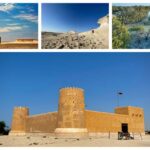
- Zekreet Fort and the Desert Drive That Sets the Mood
- Richard Serra’s Four Steel Plates: Desert Art With Real Scale
- Zekreet Beach (Ras Abrouq): Limestone Cliffs and Mushroom Formations
- Mushroom Rock: Getting the Best Angles in One Visit
- Film City Stop: A Creative Break From the Desert
- Camel Racetrack Viewing During Training: Close-Up, Moving, Memorable
- Transportation, Comfort, and Timing: The Nuts and Bolts
- Price and Value: What $47 Buys on Qatar’s West Coast
- Who Should Book This West Coast Adventure?
- Should You Book? My Practical Take
- FAQ
- Where is this tour located?
- How much does the tour cost?
- What’s included in the price?
- What vehicle will you use?
- What are the main stops on the tour?
- What languages are available during the tour?
- What is special about the Richard Serra sculpture here?
- Is there a pay later option?
- How much notice do you need to cancel?
Key Highlights at a Glance
- Zekreet Fort area and the drive that frames the west coast differently than Doha-style sightseeing
- Richard Serra’s four massive steel plates in the Brouq nature reserve—big enough to feel unreal
- Mushroom Rock / Ras Abrouq Beach scenery with limestone cliffs, pillars, and mushroom-shaped formations
- Film City stop, for a peek at Qatar’s on-location creative side
- Camel racetrack viewing during training, with chances to see camels moving close by
The West Coast Route: Why This Day Feels Worth $47
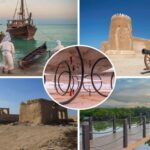
This isn’t a “one photo spot and out” kind of outing. It’s designed as a sweep across the west coast of Qatar, starting with the Zekreet area and working through a set of places that feel very different from each other—desert fort vibes, modern sculpture, strange limestone geology, and a film/production stop, ending with a camel racetrack viewing moment.
For you, that variety matters. When you’re paying for a tour, you want more than a checklist. Here, the stops connect through setting: you’re seeing Qatar’s coastline geology up close, then switching to human-made landmarks that still look at home in the desert. The modern steel plates by Richard Serra fit the emptiness so well that you start noticing the land differently.
And yes, you’ll be paying attention to details. One strong theme in the tour experience is how guides explain what you’re seeing. Several guides on this route—Yasir, Saloo, and Zia—are praised for being friendly, helpful, and able to answer questions without turning it into a lecture. That kind of guidance is especially useful at sites like the Serra sculpture, where context changes how you read the artwork.
You can also read our reviews of more tours and experiences in Zekreet.
Zekreet Fort and the Desert Drive That Sets the Mood
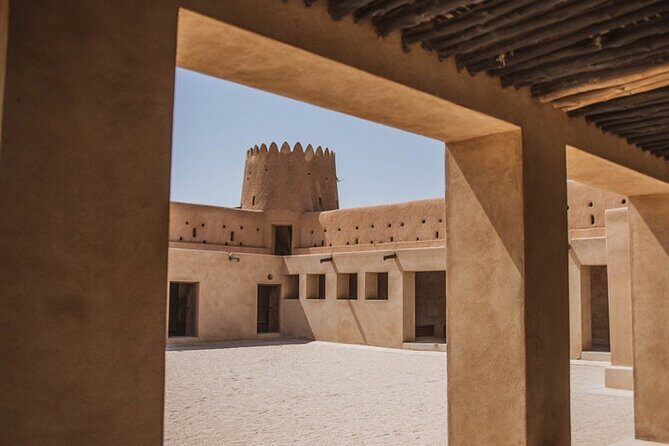
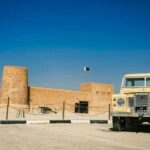
The Zekreet portion is where the tour starts to feel like Qatar’s west coast has its own rules. You head toward Zekreet Town and spend time driving around the Rock Umbrella Mountains area. The point isn’t just to arrive—it’s to watch how the terrain opens up as you move through it.
Zekreet itself is tied to a fort setting, and that matters because it grounds the scenery. Qatar’s desert can feel empty in a way that’s hard to describe. A fort area gives you a human marker—something built for protection, navigation, and survival. Even if you’re not a history buff, it helps you understand why these coastal desert edges attracted people.
Practical tip: this part of the day is visually rewarding, but it’s still outdoors and exposed. I’d plan for sun and wind, and keep your camera ready. If you’re sensitive to heat, pace yourself at each stop—take photos, then do quick glances around you to see scale.
Richard Serra’s Four Steel Plates: Desert Art With Real Scale
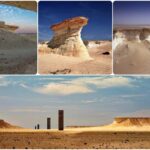
The standout moment for many people is the Richard Serra sculpture in the Brouq nature reserve. It’s not a small installation you can casually walk past. The work spans over a kilometre and features four steel plates, each over 14 metres in height.
Here’s what makes it special for you: Serra didn’t just place metal in a landscape. He examined the topography of the land first and used it as part of the design. That means the sculpture doesn’t look like a random landmark; it looks like it grew from the desert’s shape and emptiness.
You’ll likely feel that in two ways:
- Scale hits first. When objects are over 14 metres tall, your brain can’t compare them to normal city references. You end up noticing how the desert light bends and how shadows stretch.
- Silence becomes part of the experience. Even without knowing the background, you get the sense the artist intended space as a material.
If you like modern art, this is one of the rare chances to see it in a setting that’s the opposite of a museum. If you’re not into art, the sculpture can still work because it’s visually simple—massive steel plates in a vast desert void. That contrast is the hook.
One more practical detail: wear shoes you trust outdoors. You’ll likely walk and reposition for angles, especially if you want photos that show the plates against open sand and sky.
Zekreet Beach (Ras Abrouq): Limestone Cliffs and Mushroom Formations
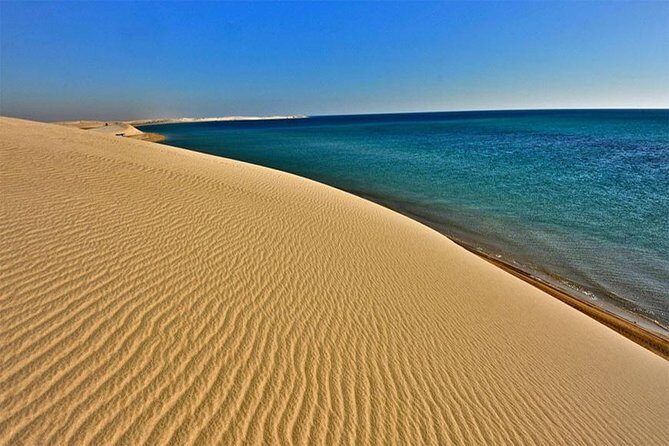
After the Serra sculpture, the tour shifts into a different kind of wonder: geology. Zekreet Beach is also known as Ras Abrouq Beach, and it’s where the scenery turns ethereal.
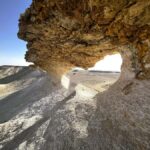
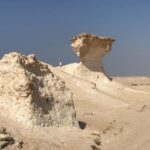
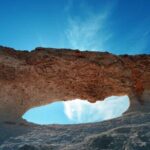
You get limestone escarpments with cliffs, pillars, and rocks—plus a shoreline that shows sedimentary layers. The headline feature is the mushroom-shaped structures made from limestone. These formations look like something from a sci-fi set, but they’re real, and the scale can be surprising once you’re close.
Why this stop is a big deal for value: you’re not paying to stand in front of a fence. You’re seeing how the coastline itself has shaped the rock. It’s the kind of stop where you take a lot of photos, then keep looking because the shapes change as you change position.
Possible drawback: the beach and rock areas can be uneven. Keep it simple—go slow, watch your footing, and don’t assume flat ground.
Mushroom Rock: Getting the Best Angles in One Visit
Some tours treat Mushroom Rock as a quick photo stop. In this route, it feels like part of a bigger story—dessert sculpture first, then limestone formations that feel like nature made its own architecture.
The “mushroom” look comes from erosion and deposition patterns that shape limestone over time. You don’t need a geology degree to enjoy it, but you do need a few minutes to move around and see different perspectives. From certain angles, the “umbrella” top and the stalk-like base feel extra dramatic.
If you want good shots:
- change position once or twice (don’t just shoot from where you first arrive)
- use the rocks for scale reference (compare your frame size to the pillars)
- try for photos where the formation meets open sky, so the shape doesn’t get lost in clutter
This is also a spot where your guide helps. When they explain what you’re looking at, you notice things you’d otherwise miss—especially at a location where the terrain is the whole point.
Film City Stop: A Creative Break From the Desert
Not every stop on this tour is purely nature or modern art. There’s also a Film City stop. This is the brief palate cleanser that adds a different flavor to the day.
In practical terms, Film City helps break up the long outdoor stretch. It’s a reminder that Qatar isn’t only about natural beauty—it also supports production and filming environments. Even if you don’t plan to do a “film tour” style visit, the stop adds variety and makes the day feel less like one long drive with stops.
If you care about storytelling, this is one of those transitions that helps you understand modern Qatar as a working place, not just a scenic one. The best part is that you still come back to the theme of setting: how creative spaces fit into the country’s wider landscape and lifestyle.
Camel Racetrack Viewing During Training: Close-Up, Moving, Memorable
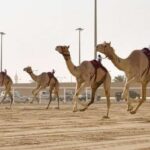
The last “wow” stop is the camel racetrack viewing during training. This is where the day becomes lively.
One of the most vivid moments is seeing camels parading and even crossing close to the road—so close that the movement happens in front of your car. That’s not something you can fake with a single landmark photo. It’s a real-time scene: motion, noise, and animals doing what they do during training.
This stop is also valuable because it’s not just a static viewpoint. You get the sense of a routine—camels being moved and practiced, with people managing the training environment. If you enjoy everyday local sights (not just major attractions), this is a strong fit.
Practical tip: keep an eye on your surroundings at the roadside. When animals are actively moving, you want to avoid rushing to the edge of where you’re standing.
Transportation, Comfort, and Timing: The Nuts and Bolts
This tour includes pickup and drop-off, so you’re not stuck arranging your own ride between scattered locations. You travel in a modern, 4WD air-conditioned vehicle, which matters in Qatar’s climate and also helps on rougher terrain.
Comfort is also a theme in the guide feedback. People specifically mention good pace and comfort, which suggests the tour is planned to avoid constant sprinting between stops. That helps you enjoy each place instead of just checking boxes.
Bottled water is included. Still, I recommend bringing a hat and sunscreen anyway, especially if you know you burn easily. You’ll spend time outdoors at desert and coastal stops, and shade may be limited depending on where you stand.
Price and Value: What $47 Buys on Qatar’s West Coast
At $47 per person, the value comes from the mix: multiple major stops that are spread out across the west coast, plus guide support, plus transportation with pickup/drop-off and bottled water.
Here’s what makes that pricing feel fair:
- You’re paying for access to a remote-feeling route where DIY planning is more time-consuming.
- You get several distinct sights in one day: fort/desert scenery, modern art by Richard Serra, limestone formations at Ras Abrouq, Film City, and camel racetrack training viewing.
- The guide component adds meaning. With guides like Yasir, Saloo, and Zia praised for answering questions and sharing cultural context, you’re not just seeing places—you’re understanding them.
If you’re short on time in Qatar and want an authentic-feeling route beyond city centers, this is one of the more efficient ways to see the west coast’s texture.
Who Should Book This West Coast Adventure?
I think this tour is best for you if:
- you want a mixed day of desert, coastline geology, and modern art
- you enjoy guided explanations, especially at sites where context changes your experience
- you like seeing local life in motion, not just static monuments (the camel training viewing is a good example)
It might be less ideal if you hate long driving days or if you want a slow, low-movement nature walk day only. This route is built for variety, so the rhythm is active.
Also, if you’re traveling with teens or friends who like different things (one likes photos, one likes animals, one likes art), the itinerary makes it easier to keep everyone interested.
Should You Book? My Practical Take
Book this tour if you want Qatar’s west coast at full intensity: desert emptiness, modern steel art in a huge outdoor setting, limestone mushroom formations along the shoreline, and a camel training scene that feels alive. The $47 price makes sense for the number of stops you get and for the transport setup—especially with pickup/drop-off and a 4WD air-conditioned vehicle.
Skip it if you only want one type of attraction (only beach, only fort, only art) or if you’re extremely sensitive to sun and road time. For most people, though, this is a strong way to turn a day into real memories, not just a photo album.
FAQ
Where is this tour located?
The tour operates in the Al-Shahaniya Municipality area of Qatar, exploring parts of the west coast.
How much does the tour cost?
The price is $47 per person.
What’s included in the price?
Pickup and drop-off, bottled water, and transportation by a modern, 4WD air-conditioned vehicle are included.
What vehicle will you use?
You’ll travel in a modern, 4WD air-conditioned vehicle.
What are the main stops on the tour?
Key stops include Zekreet Fort, Film City, the Richard Serra sculpture, Mushroom Rock (Ras Abrouq area), and a camel racetrack viewing during training.
What languages are available during the tour?
The tour is offered in English, Arabic, and Hindi.
What is special about the Richard Serra sculpture here?
It consists of four steel plates in the desert within the Brouq nature reserve. The sculpture spans over a kilometre, and each steel plate is over 14 metres high.
Is there a pay later option?
Yes. You can reserve & pay later, meaning you can book your spot and pay nothing today.
How much notice do you need to cancel?
You can cancel up to 24 hours in advance for a full refund.