REVIEW · ZEKREET
From Doha: Full-Day Tour to Qatar North and West
Book on GetYourGuide →Operated by OryxAdventure Tourism · Bookable on GetYourGuide
Northwest Qatar is a full-day camera feast.
What I like most is how the route mixes UNESCO heritage with desert-scale contemporary art, not just roadside views. I also like that you get comfort in a 4X4 air-conditioned vehicle while still stepping out for real wandering time. One drawback to plan for: it’s long, outdoors, and there’s walking, so bring good shoes and expect sun and dust.
You’ll also feel the day is guided in a thoughtful way. Guides such as Sajid, Abdullah, Adnan, Muhammad Syed, and Ahmad Aurangzeb are praised for clear explanations (especially at Al Zubarah) and smooth pacing, so the day doesn’t turn into a stop-and-rush sprint. You should still know the vibe: this is a remote part of Qatar, so you’ll want to handle food expectations yourself.
In This Review
- Key highlights worth waking up for
- Why Northwest Qatar feels like a different country
- Getting there from Doha: pickup, 4×4 comfort, and timing
- Al Zubara Fort: the UNESCO site you’ll actually understand
- Traditional village life and the north’s quieter streets
- When the water line reaches Bahrain: Al Shamal on clear days
- Olafur Eliasson in the desert: art that depends on where you stand
- Zekreet Fort and the limestone world of rock formations
- Richard Serra’s East-West/West-East: big art in a wide space
- Al Shahaniya Camel Racetrack: a quick cultural detour
- Price and value: does $69 make sense?
- What to bring (and what will slow you down)
- Who this tour fits best (and who should skip it)
- Should you book this North and West Qatar day trip?
- FAQ
- How long is the tour from Doha?
- What’s included in the price?
- What should I bring for the day?
- Where does pickup happen in Doha?
- What languages is the guide?
- Is photography allowed?
- Is the tour suitable for wheelchair users or mobility impairments?
- Can I cancel and get a full refund?
Key highlights worth waking up for
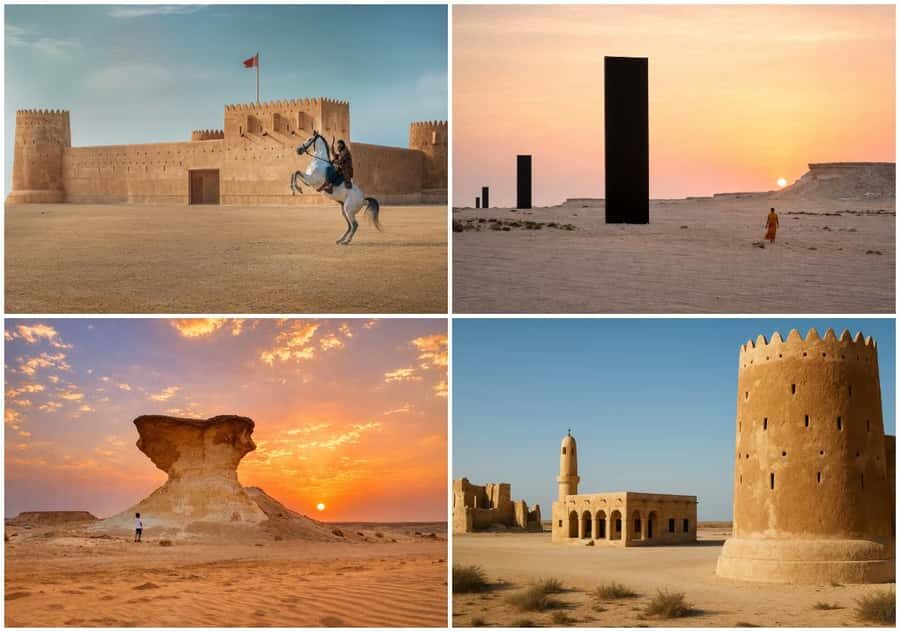
- Al Zubara Fort (UNESCO) as an archaeological landscape worth slow looking
- Traditional Qatari village area with limestone-and-mud homes and local life
- Al Shamal viewpoints where you can see Bahrain on clear days
- Olafur Eliasson desert installation and Richard Serra’s East-West/West-East sculpture
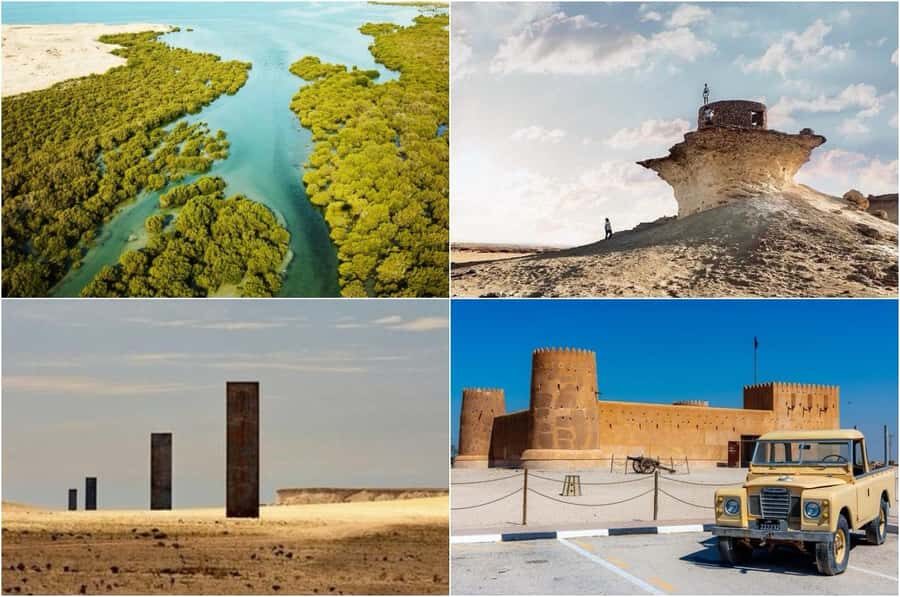
- Zekreet Peninsula for limestone rock formations and that umbrella-shaped photo subject
- Al Shahaniya Camel Racetrack stop with time for photos and self-guided exploring
Why Northwest Qatar feels like a different country
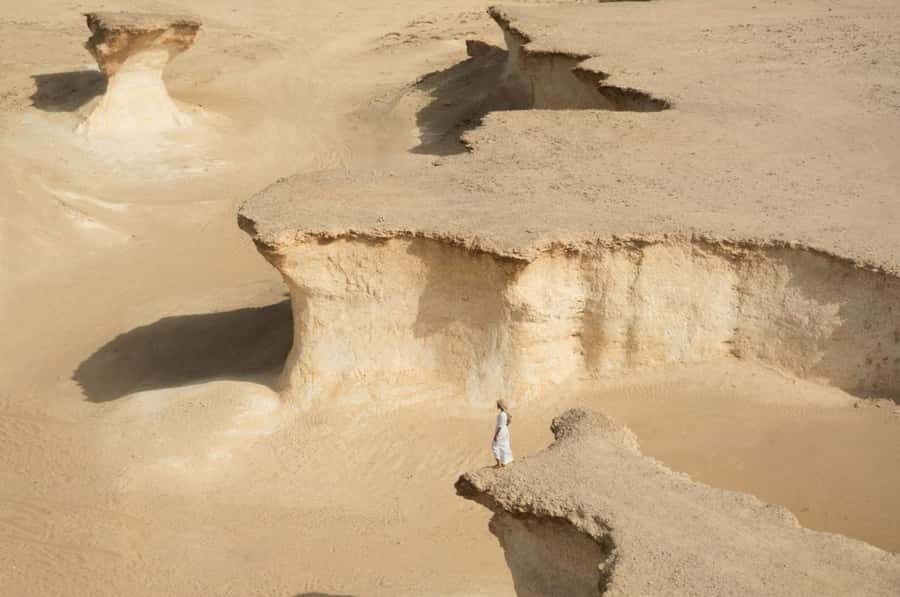
Doha is all modern edges and polished convenience. This tour swings hard toward the north and west, where the scenery changes fast—from sea-adjacent horizons you might glimpse from Al Shamal, to limestone rock country around Zekreet, to wide-open desert art spaces. You’re not stuck in one theme park version of Qatar.
The UNESCO stop gives you a strong anchor. Al Zubara Fort isn’t just a pretty ruin—your guide helps you understand why it matters as the first UNESCO World Heritage Site connected to Qatar’s archaeological story. From there, the day keeps moving so you’re always trading one kind of “Qatar to look at” for another.
A few more Zekreet tours and experiences worth a look
Getting there from Doha: pickup, 4×4 comfort, and timing
This is a 7-hour day trip, and the vehicle does real work. You ride in a 4X4 air-conditioned car, which matters once you’re leaving Doha and the roads turn more rugged. You’ll also get bottled water included, but don’t treat that as your whole hydration plan.
Pickup is flexible within Doha City. You can be picked up from any hotel in Doha City, as long as you share the full hotel name and address. If you’re coming from the airport, you meet your guide at gate number 4 near the pickup/drop-off area, and they coordinate with you by WhatsApp.
The tour runs with an English/Arabic live guide. That language support matters here because the story you’re hearing isn’t generic. The strongest moments are the history explanations at Al Zubarah and the way art is framed in relation to where it sits.
Practical note: the day includes an outdoor walk and some off-road adventure. It’s not an all-couch experience.
Al Zubara Fort: the UNESCO site you’ll actually understand
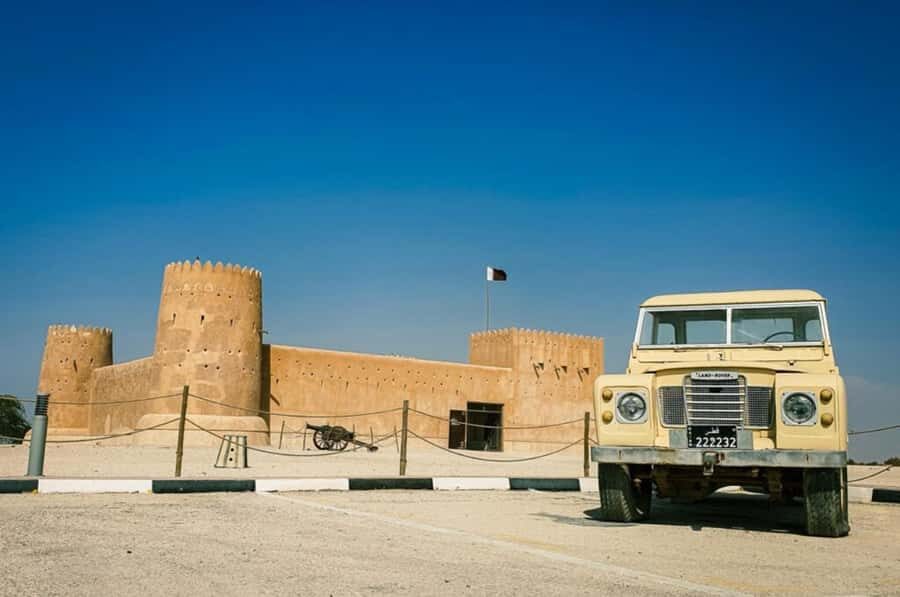
Your start point is Al Zubara Fort, recognized as a UNESCO World Heritage Site and known for its archaeological landscape feel. The fort area is where the tour’s education really kicks in. Instead of just pointing and moving on, you get time to walk and look—and your guide ties what you see to how this place fit into Qatar’s past.
If you care about history, this is the spot that earns your attention. If you care about photography, it’s also a good one because you can capture textures—stone, walls, and the way the fort sits within open surroundings. Expect about an hour of on-site time so you’re not counting minutes.
One thing to keep in mind: this isn’t a “hands-on museum” stop. You’re outdoors, and the light changes fast. Wear comfortable shoes and plan for sun.
Traditional village life and the north’s quieter streets
After the fort, the tour shifts from monuments to everyday texture. You’ll visit a traditional Qatari village area where the houses are made with limestone and mud. This is the kind of place that makes architecture feel like a story you can read with your eyes.
If you’ve only seen Qatar through the Doha skyline, these village homes help balance the picture. It also gives your brain a break after the fort—less “dates and structures,” more “how people lived with the materials around them.”
You’ll also pass through scenic photo-stop areas like Al Khor (Municipality) and Purple Island during the day’s drives. These stops are short, but they’re the right kind of short: you get a chance to pause, orient yourself, and grab quick shots without losing momentum.
When the water line reaches Bahrain: Al Shamal on clear days
One of the more satisfying “wait, seriously?” moments on this tour is the chance to see Bahrain on clear days from Al Shamal. It’s not a guarantee, but that’s part of what makes it fun. When visibility cooperates, the region suddenly feels bigger than you expected.
Al Shamal also ties into why the route focuses on the north. You’re not just moving inland. You get that sense of coastal proximity even when you’re standing in desert-adjacent places.

Olafur Eliasson in the desert: art that depends on where you stand
The tour includes a stop at an Olafur Eliasson site-specific installation in the desert just north of Al Zubarah. The guide framing here matters: the installation is presented as a way to think about how your perception shapes your relationship with reality.
In practical terms, that means you’ll get more out of it if you slow down. Look around the installation the way you would look at a scene in a painting: the emptier the surroundings, the more your eyes work for meaning. Bring your camera, but also take a few seconds without it—this is one of those places where the view and the thought are linked.
Zekreet Fort and the limestone world of rock formations
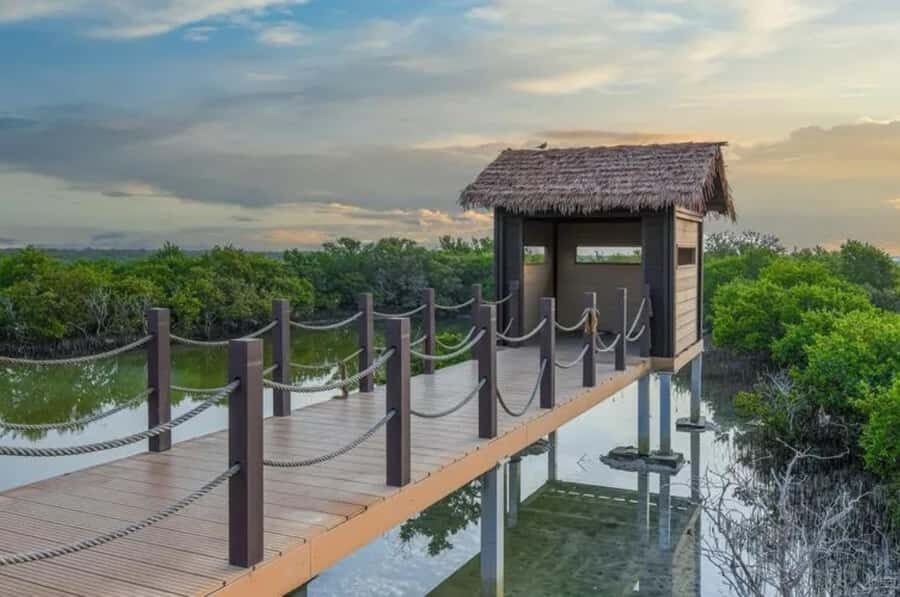
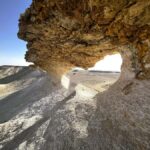
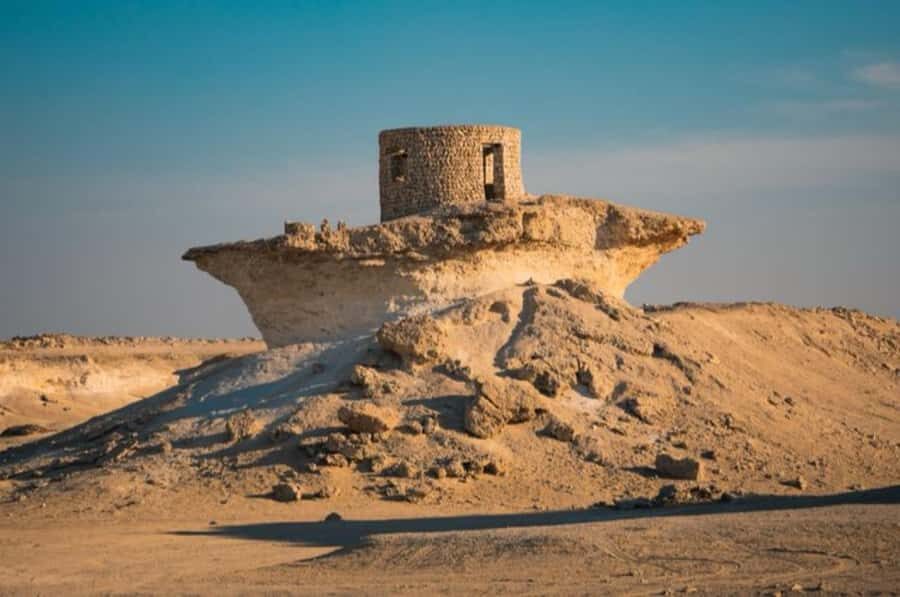
Next comes Zekreet, a peninsula area that functions as a wildlife reserve with limestone rocks. Here you’ll do more walking and get that off-road feel. The day is still guided, but you’ll have time for free wandering so you can choose how long you stay with each view.
Zekreet Fort is a major stop, and it’s one of those locations where history and scenery show up together. Your time here is built around views among dunes and the wide-open feel of the area.
Then there’s the photography favorite: the umbrella-shaped rock. This is the kind of shape that makes people stop talking mid-sentence. It also gives you a simple target for framing your shots, especially when the sun is low.
If you hate heat and uneven ground, this section will test your patience. If you’re the type who enjoys getting dusty for a great photo, you’ll do well here.
Richard Serra’s East-West/West-East: big art in a wide space
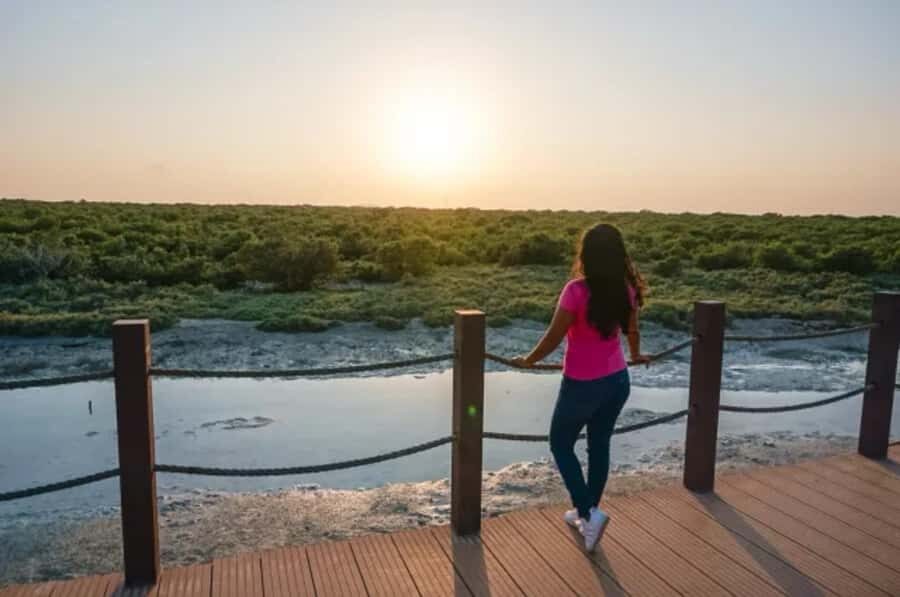
The tour also stops at the Richard Serra desert sculpture called East-West/West-East. This is the other major art anchor beside Olafur Eliasson. Because it’s placed in an open, outdoor environment, it reads differently depending on the angle you’re standing in.
You’ll get time to visit and look around, plus sightseeing moments as you travel between points. If you like sculptural work, this is a real highlight. If you’re unsure about contemporary art, don’t overthink it. Treat it like a reason to look at space, shadows, and distance in Qatar—then decide what you think.
Al Shahaniya Camel Racetrack: a quick cultural detour
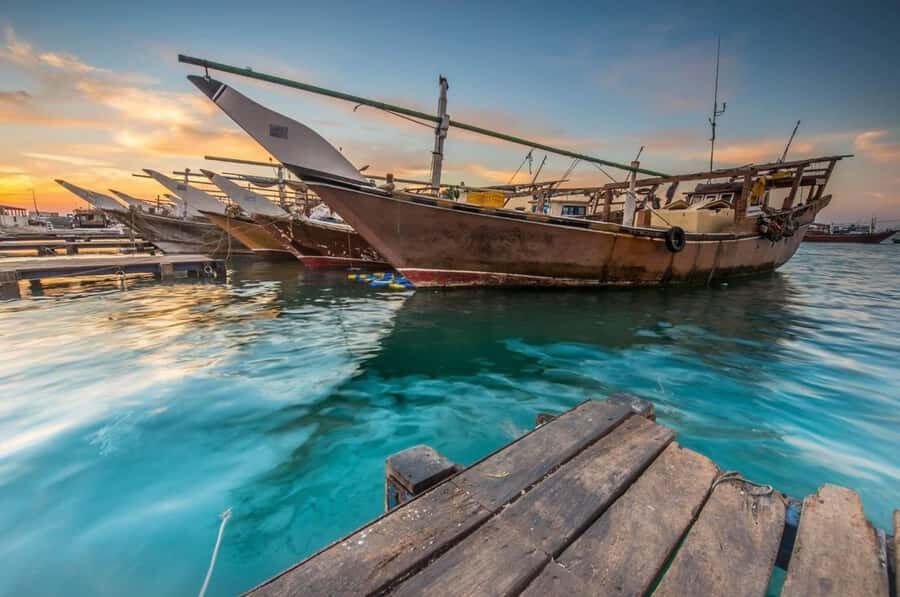
The day includes a stop at Al Shahaniya Camel Racetrack. This is a photo stop with free time and a self-guided feel. It’s not meant to be a deep-dive museum moment; it’s a chance to see a different side of Qatar’s cultural rhythms and get a few shots with minimal pressure.
This stop also helps break up the more “big viewpoint” sections, so you don’t feel like you’re only chasing vistas.
Price and value: does $69 make sense?
At $69 per person for a full-day experience, the value is mostly in the combination:
- guided interpretation across multiple major stops (history + art)
- door-to-door pickup/drop-off options in Doha
- 4X4 air-conditioned transport
- bottled water included
You’re not just paying for one site. You’re paying to cover a wide area efficiently without dealing with multiple transfers and backtracking on your own.
Meals are not included, and this matters in a remote area where you may not find a great sit-down option. My advice: pack snacks or plan your lunch strategy before you leave Doha. You can also keep in mind that there are restrictions in some areas regarding food and drinks, so keep it respectful and follow on-site rules.
What to bring (and what will slow you down)
The tour is outdoors most of the day. Bring:
- comfortable walking shoes (there’s a moderate amount of walking)
- hat and sunscreen
- camera
- water (you’ll have some, but bring more if you’re sensitive to heat)
What not to bring: pets, smoking, and luggage/large bags.
If you’re the type who likes to travel light, this fits your style. If you’re carrying heavy gear for a full-day hiking plan, you’ll likely regret it.
Who this tour fits best (and who should skip it)
This day trip is best for you if you want:
- a guided look at Qatar’s heritage, especially at Al Zubarah Fort
- art in a real place (desert installations and sculptures)
- photo opportunities that go beyond the usual city snaps
- a comfortable ride (the 4X4 helps a lot), paired with time to walk
It’s not suitable for mobility impairments or wheelchair users, based on the walking and outdoor conditions.
If you hate uneven ground, bright sun, and getting back in the vehicle for the next view, you might prefer a shorter, more city-based outing.
Should you book this North and West Qatar day trip?
I’d book it if you want one day that feels like Qatar’s geography and ideas are in the same conversation: UNESCO archaeology, village materials, coastal sightlines, and desert-scale art. The best part is that you’re not stuck doing only one style of travel. You’re switching modes all day, and the pacing is built for that.
You might skip it if you need a fully relaxed day with minimal walking and zero outdoor time. Also consider your food plan before you go, because this is the kind of route where meals can be more complicated than in Doha.
If you do book, do it with one mindset: wear sturdy shoes, protect yourself from the sun, and let the day be slow about the important stops—Al Zubarah first, then Zekreet, then the art in the desert.
FAQ
How long is the tour from Doha?
It runs for about 7 hours.
What’s included in the price?
The tour includes pickup and drop-off, a 4X4 air-conditioned car, and bottled water.
What should I bring for the day?
Bring comfortable shoes, a hat, camera, sunscreen, and water. The tour is outdoors and includes walking.
Where does pickup happen in Doha?
You can be picked up from any hotel within Doha City if you provide the full hotel name and address. If you’re flying in, you meet at gate number 4 near the passenger pickup/drop-off area, and your guide coordinates via WhatsApp.
What languages is the guide?
The live guide speaks English and Arabic.
Is photography allowed?
Yes, photography is allowed, but you should follow no food and drinks restrictions in certain areas.
Is the tour suitable for wheelchair users or mobility impairments?
No. It’s listed as not suitable for people with mobility impairments or wheelchair users.
Can I cancel and get a full refund?
Yes. It offers free cancellation up to 24 hours in advance for a full refund.