REVIEW · ZEKREET
West of Qatar Richard Serra, Mushroom Hills, CamelRace track
Book on GetYourGuide →Operated by Luxurious Tourism · Bookable on GetYourGuide
Steel in the sand sounds impossible. This day trip strings together Richard Serra’s sculpture in the Brouq nature reserve, the weird-wonder of Mushroom Hills, and a peek at camel-racing culture in Al Shahaniya.
I like the way the stops feel like chapters, not checkpoints. I especially love the chance to see Richard Serra’s East-West/West-East work with four steel plates over 14 meters tall, then keep going to Ras Brouq’s coast and prehistoric rock vibe. And I like that the guiding focus is practical and story-driven, with guides such as Abdul Sattar, Faisal, Zubair, Noor, and Nawaz praised for sharing context as you travel.
One possible drawback: there’s no meal included, and you’ll still be out in bright desert conditions, so plan for hunger and sun the same way you would for a full afternoon.
In This Review
- Key takeaways before you go
- A 4-hour loop from Doha: what fits, what doesn’t
- Ras Brouq and Richard Serra’s four steel plates over 14 meters
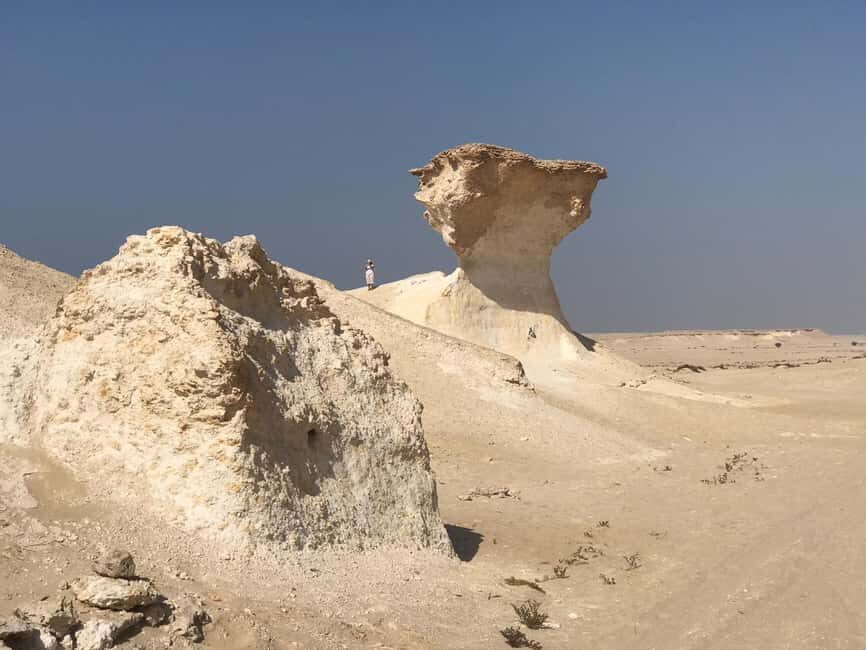
- Mushroom Hills: limestone rocks that look like they were grown
- Al Shahaniya camel racetrack: heritage with a modern twist
- Zekreet fort ruins: late-18th/early-19th-century remnants
- Heat, timing, and how to get good photos without rushing
- Price and logistics: is $49 worth it
- Who should book this tour west of Qatar
- Should you book this Serra, Mushrooms, Camel Track, and Zekreet day tour?
- FAQ
- Where does the tour start?
- How long is the tour?
- What is the price?
- What does the tour include?
- Is a meal included?
- What are the main stops on the itinerary?
- Does the tour include the Richard Serra sculpture?
- How does camel racing work here, based on what the tour explains?
- Is there free cancellation?
Key takeaways before you go
- Richard Serra at Ras Brouq: four towering steel plates (over 14 meters each) forming East-West/West-East.
- Brouq nature reserve timing: plan on photo pauses, not a museum-style slow walk.
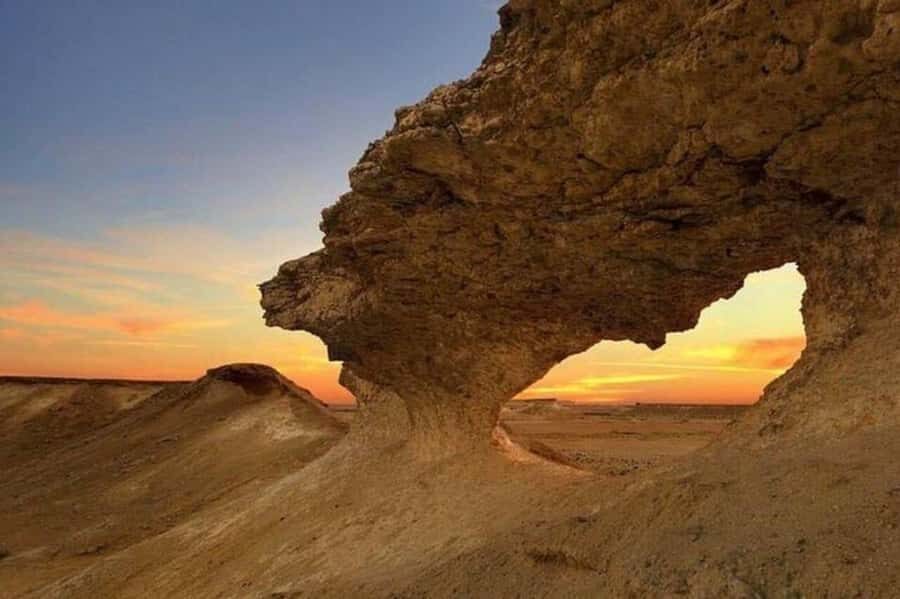
- Mushroom Hills’ limestone shapes: the rock formations look like they were grown, not carved.
- Al Shahaniya camel racetrack: a taste of a sport with deep roots, including robotic jockeys.
- Zekreet fort ruins: late-18th/early-19th-century remnants with quick, high-payoff photo stops.
- AC transport plus water/tea/coffee: comfort support during a 4-hour day loop.
A 4-hour loop from Doha: what fits, what doesn’t
This is a fast, well-paced tour that stays efficient. You’ll get pickup from inside Doha, then a couple of scenic drives west before you hit the main stops. The total time on the ground isn’t huge, but it’s long enough to see the big attractions and still breathe.
The core idea is variety in one day: modern art, prehistoric-looking geology, and Qatari sports heritage. It’s also a good choice if you want the “west of Qatar” feeling without committing to a full-day road trip.
What you should know up front: it’s not a sit-and-stay tour. Expect photo stops and short visiting windows, not long guided treks. If you’re the type who hates rushing, you’ll want to be organized about sun protection and camera settings so you can spend your time enjoying instead of troubleshooting.
You can also read our reviews of more tours and experiences in Zekreet.
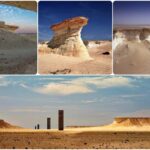
Ras Brouq and Richard Serra’s four steel plates over 14 meters
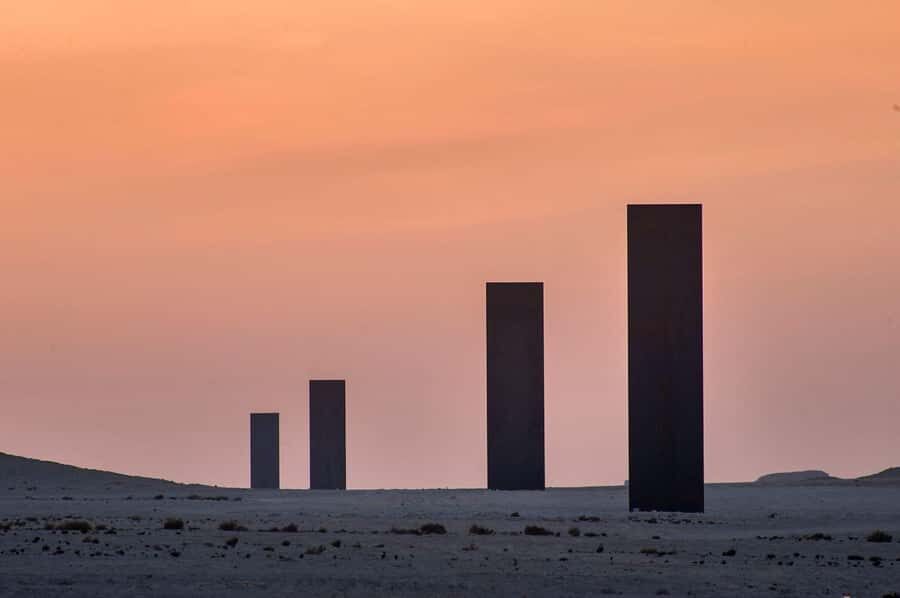
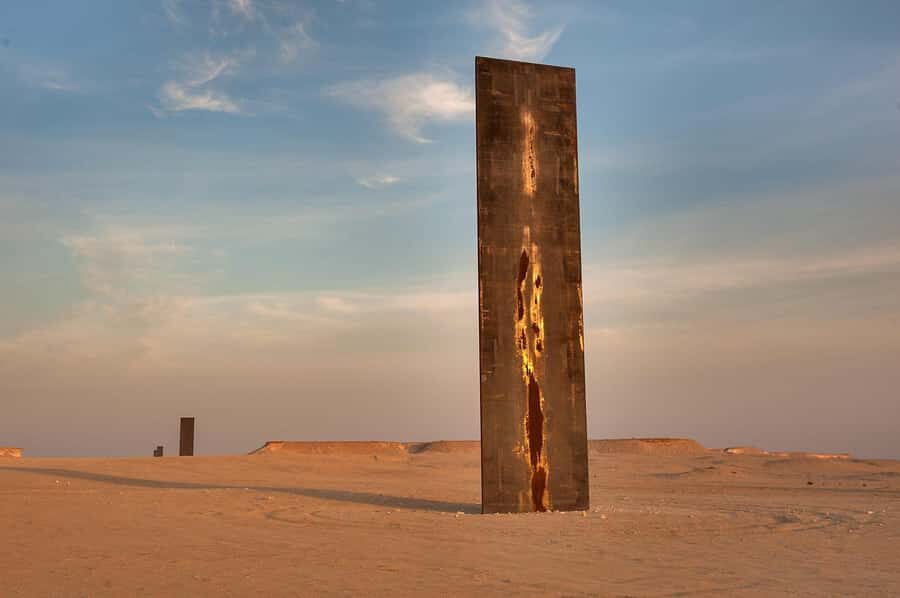
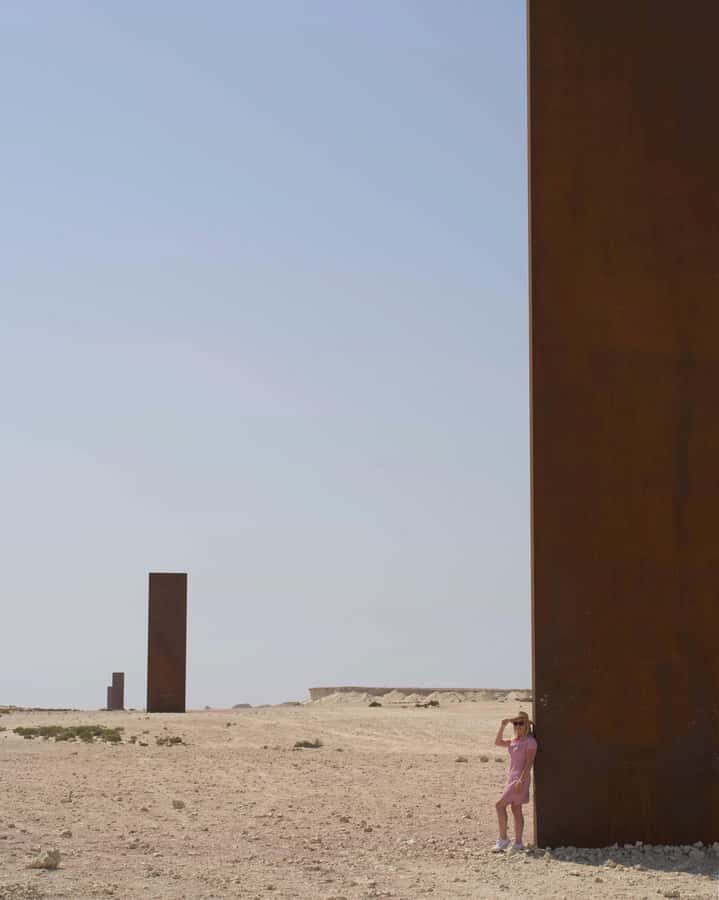
The emotional high point is the Richard Serra sculpture in the Brouq nature reserve area near Ras Brouq. This isn’t a small roadside artwork. The piece spans over a kilometer and is made of four steel plates, each more than 14 meters tall, arranged as East-West/West-East.
Here’s why it works so well for a day tour: it turns the desert into a gallery without pretending it’s indoor quiet. The scale does the heavy lifting. From different angles, the plates slice the horizon and make you rethink distance in flat terrain. Even if you don’t know modern art theory, the visual logic is easy to feel.
The guided portion matters too. A good guide will point out how the sculpture sits relative to the surrounding features, and why the shape and orientation are meant to create movement for your eyes. In the reviews, guides like Faisal and Stephen are praised for not rushing exploration and for taking time with photos. That can make a difference here, because Serra’s work rewards repositioning.
Practical tip: bring something for sun and glare. The sculpture area is outdoor, and you’ll likely be stopping and shooting from multiple spots. If your phone camera overexposes at midday, try stepping slightly away from direct light before you snap.
Mushroom Hills: limestone rocks that look like they were grown
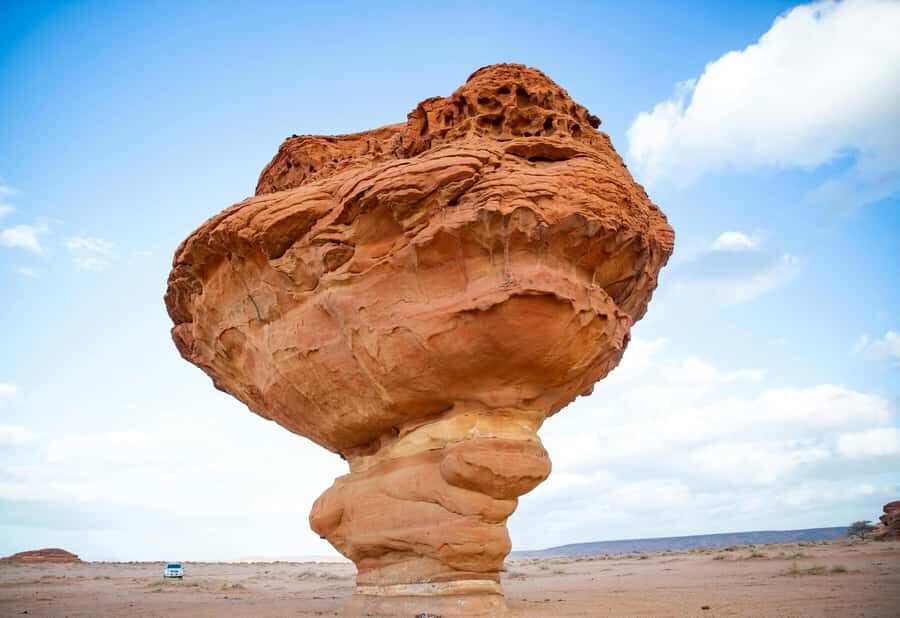
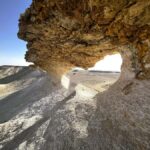
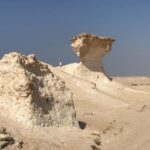
Next comes the Mushroom Hills experience, famous for limestone formations that resemble mushrooms. The shapes are exactly the kind of thing that makes you do a double take: you know it’s rock, but your brain keeps searching for a softer explanation like wind, erosion, or something more “made.”
This stop is built for casual exploration and photos. There’s a photo stop plus a longer window that includes free time and sightseeing. That’s your chance to slow down, walk a bit around viewpoints, and frame shots without feeling like you’re sprinting to the next stop.
Why I think this is a smart pairing: Serra is about engineered shape, while Mushroom Hills is about natural form. Together, they give you a neat contrast between human-made steel and geology doing its slow work.
One consideration: because these are rocks outdoors, shoes matter more than you might expect. The best results come when you can move confidently on uneven ground. In a review, Ryan mentioned help for children finding footing on steeper rock angles, which is a good clue that the terrain can be more dramatic than it looks from a distance.
Al Shahaniya camel racetrack: heritage with a modern twist
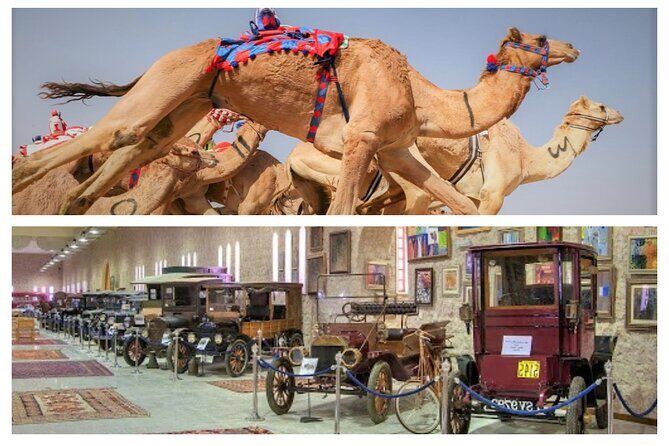
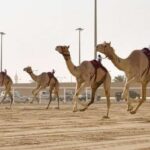
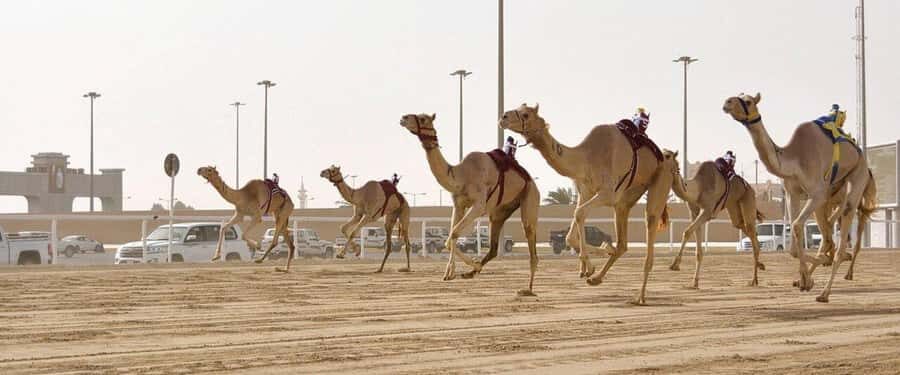
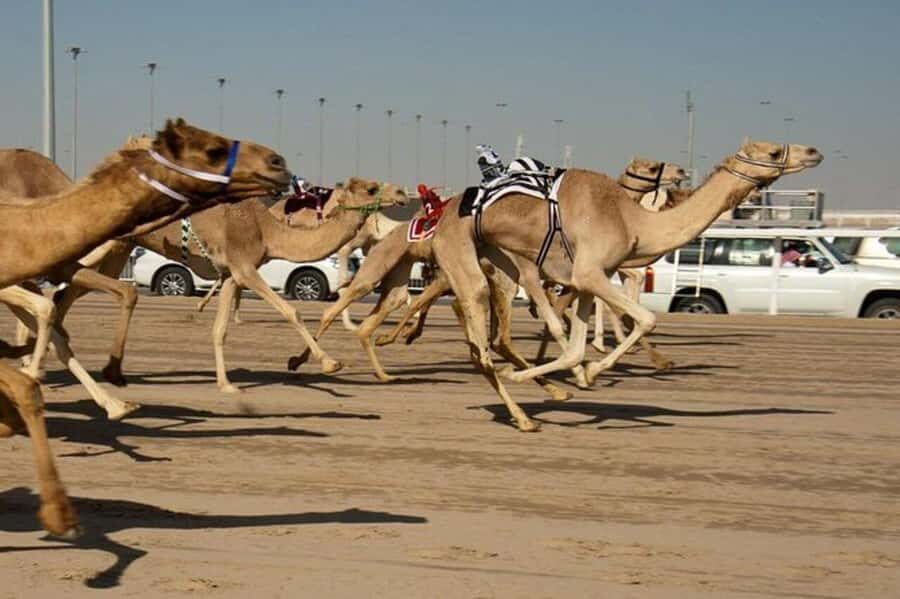
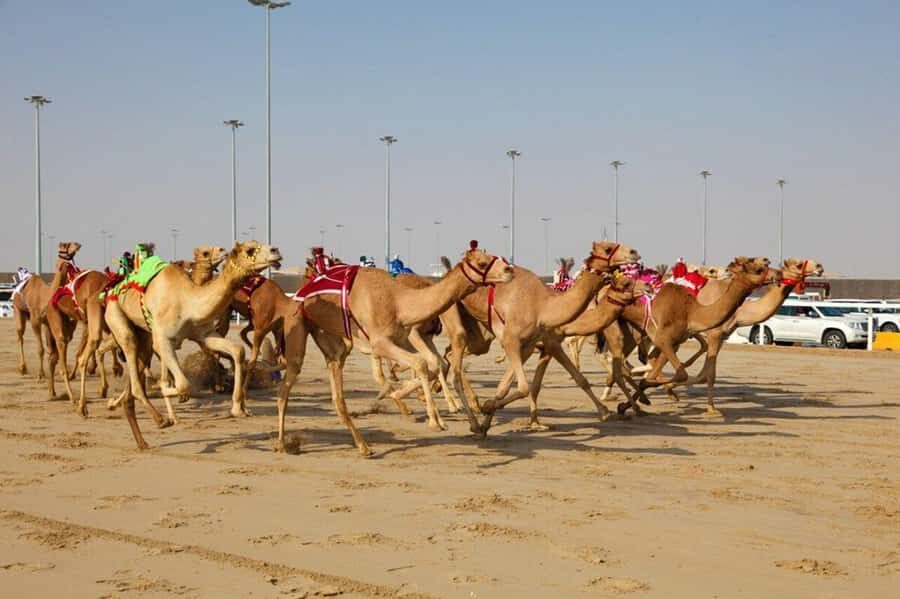
The Camel Race Track stop is one of the most culturally specific parts of the day. Camel racing in Qatar is tied to long-standing tradition and is treated like a national sport. Races are typically held over distances of about 4 to 10 kilometers, and camels are specially bred and trained.
One detail that’s fun to see explained on the spot is the robotic jockey system. Instead of human jockeys, lightweight robotic jockeys are used, controlled remotely by trainers who follow the camels alongside the track in cars. It’s a weird-but-real blend of old sport and new tech, and it helps the whole event make sense once you understand the mechanics.
In the reviews, people found this portion genuinely exciting, including moments where someone witnessed the start of a camel race. Even if your timing doesn’t line up with an active race moment, you still get the atmosphere: a place designed for speed, teamwork, and tradition.
The tour includes time for a visit or pass-by plus a scenic drive element, so you’re not stuck looking at one fixed angle. It’s the kind of stop that works best when your guide narrates what you’re seeing and how it fits into Qatari culture, not just what the racetrack is.
Practical tip: if you’re sensitive to noise and movement, this is still a place with energy. Keep expectations realistic: you’re getting a cultural stop within a 4-hour itinerary, not full event coverage.
Zekreet fort ruins: late-18th/early-19th-century remnants
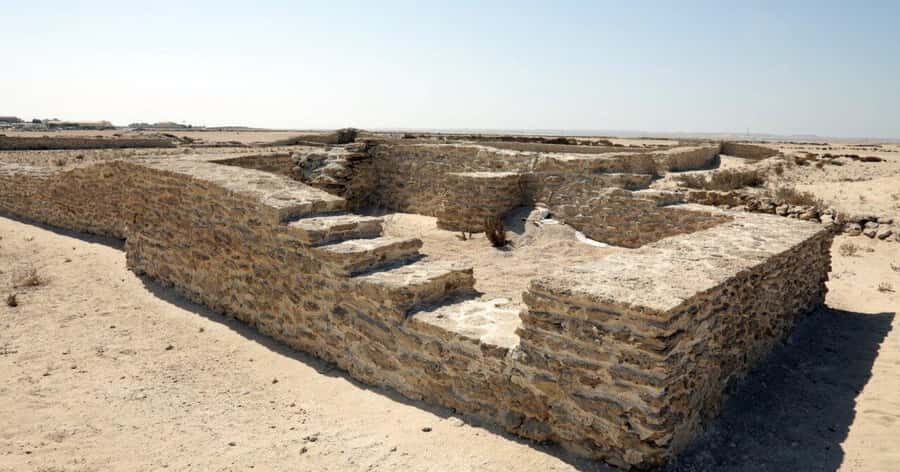
Then you shift to Zekreet, where you’ll have photo opportunities and sightseeing. The fort ruins here are dated to the late 18th or early 19th century, which gives the day an extra layer: even though you’re mostly dealing with modern art and natural rock forms, you also get a time anchor.
The time allocation is short, so this stop is about impact, not deep study. You’ll likely capture a few good angles, look for telltale remnants, and then move on. That makes it ideal if you want a taste of Qatar’s historical sites without spending hours with paperwork and long explanations.
This also helps you avoid the main travel mistake: dragging yourself through a place that needs patience when you’re already mentally spent from heat and driving. Here, the tour respects your time.
If you’re the kind of traveler who likes to understand what you’re photographing, pay attention during the guide’s quick briefing. In reviews, guides are repeatedly praised for pointing out what’s worth looking at en route and for taking photos when asked. That habit is especially useful at short stops like this.
Heat, timing, and how to get good photos without rushing
The tour duration is 4 hours, and it moves. That’s good for efficiency, but it means you should plan your comfort the same way you plan your camera settings.
You’ll be in an air-conditioned vehicle during the drives, plus water/tea/coffee is included. Still, you’ll spend time outside at the key viewpoints. One review specifically noted the 43°C heat and appreciated refreshments and water. Translation: bring the mindset that you’re outside for moments, not hours, and you’ll enjoy it more.
Here are the simple things that help:
- Wear breathable clothes and sunglasses. The glare in open outdoor areas can be intense.
- Use sunscreen and a hat. It’s basic, but it’s the difference between enjoying the moment and thinking about cooling down.
- If you’re photographing the Serra sculpture, expect strong shadows and high contrast. Walk to find the angle where lines look clean instead of blown out.
Also, don’t let the itinerary pace steal your attention. Multiple reviews mention guides who didn’t rush and who took time for photos, including one guide helping a family with kids navigate steeper rock angles. If you want calm viewing, ask your guide to show you the best spots first, then take your time.
Price and logistics: is $49 worth it
At $49 per person, this is priced for what you actually get: transport, a live English guide, and included drinks, all in a tight 4-hour window.
Let’s break down the value:
- You’re paying for an air-conditioned SUV/jeep experience plus pickup and drop-off from anywhere inside Doha.
- You get a professional guide who helps you understand each stop’s purpose, which is what turns scenery into a story.
- Water/tea/coffee are included, which reduces the cost and stress of hunting for refreshments mid-day.
What you don’t get: a meal. That’s the biggest mismatch to budget, especially if you’re hungry or you’re traveling with kids. If you eat early before pickup, you’ll feel better during the outdoor segments. If you don’t, you’ll want to plan a simple snack and water stash before you meet the group.
Overall, the value depends on your travel style. If you want “hit the highlights in one go” with guide context, $49 can feel fair. If you prefer slow travel and long stays at one place, you might feel the stops are brief. The good news is that the mix is strong: sculpture, formations, sport heritage, and ruins, all within one coherent westward day.
Who should book this tour west of Qatar
This tour is ideal if you want a mix-and-match day that feels like Qatar in layers. It suits:
- Art lovers who want Serra’s work in a desert setting, not in a museum.
- Curious travelers who like both geology and culture in one outing.
- Families with kids, as long as everyone can handle short outdoor sessions. Reviews highlight guides being patient and helpful with children on rock angles.
- People who enjoy photo-friendly stops but don’t want a full day of planning.
It may not be the best fit if you want long guided time in one location or you’re very heat-sensitive and dislike outdoor viewpoints.
Also, if you care about narration, take comfort in the fact that multiple guides were praised for explaining history and for not rushing. That’s especially useful at places like Zekreet and at the sculpture, where a quick context improves the experience.
Should you book this Serra, Mushrooms, Camel Track, and Zekreet day tour?
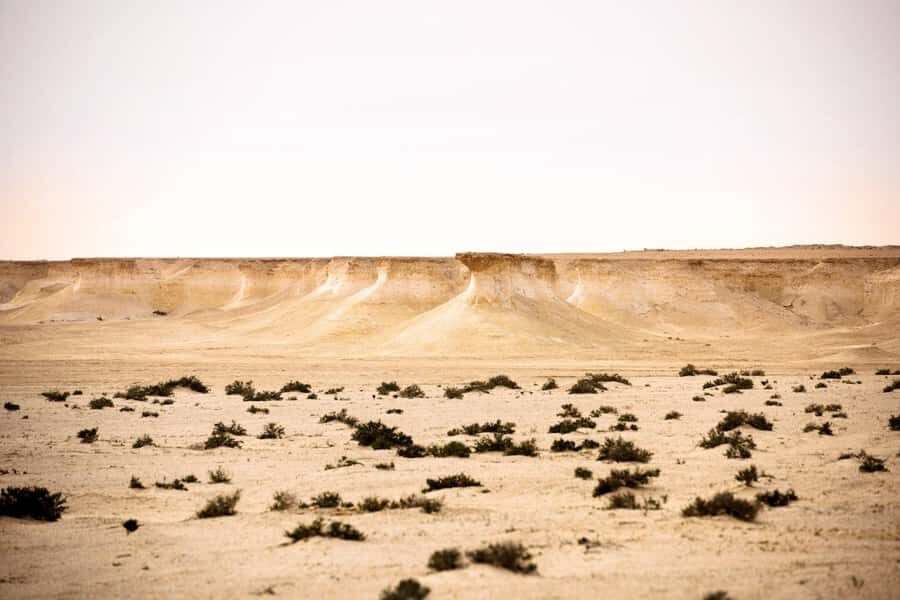
Yes, if you want a smart, action-packed 4-hour introduction to western Qatar. The combination is unusual in a good way: modern steel sculpture next to desert geology, plus a cultural sport stop that many visitors only hear about.
Book it if you like guided context and you’re happy with photo stops and shorter visiting windows. If you hate rushing, choose it only if you can stay flexible and you’re ready to slow down at the moments that matter to you.
My advice: go prepared for heat, eat before pickup, and treat this like a “great highlights reel” day. You’ll come away with strong visual memories and a better sense of how Qatar’s past, present, and geography connect.
FAQ
Where does the tour start?
Pickup is from your chosen location inside Doha, and you return back to Doha at the end of the day.
How long is the tour?
The tour duration is 4 hours.
What is the price?
The price is listed at $49 per person.
What does the tour include?
It includes transportation in an air-conditioned vehicle, pickup and drop-off in Doha, a professional English-speaking tour guide, and water/tea or coffee.
Is a meal included?
No meal is included.
What are the main stops on the itinerary?
You’ll visit or pass by the Al Shahaniya Camel Racetrack, stop for photos and sightseeing at Zekreet, and visit the Mushroom Hills area and the Richard Serra sculpture in the Brouq nature reserve.
Does the tour include the Richard Serra sculpture?
Yes. The Richard Serra East-West/West-East sculpture is part of the experience, located at Brouq nature reserve near Ras Brouq.
How does camel racing work here, based on what the tour explains?
Camel races are typically run over long distances (about 4 to 10 kilometers), and the tour explains that robotic jockeys are used instead of human jockeys, controlled remotely by trainers following in cars.
Is there free cancellation?
Yes, you can cancel up to 24 hours in advance for a full refund.