REVIEW · DOHA
Souq Waqif Through the Eyes of Locals | Walking Tour | Doha City
Book on Viator →Operated by 365 Adventures · Bookable on Viator
Souq Waqif hums like a living postcard. What makes this walk fun is the way you’re guided through Gold Souq shopping streets, then redirected to the working parts of the market like the falconry area. I also like how the tour doesn’t treat it like a museum; you get a real sense of daily craft and local animal culture. One drawback to plan around: it’s only about 3 hours, so if you love browsing and bargaining for hours, you’ll want extra time before or after.
This is a private walking tour, so you’re not squeezed into a big group shuffle. You’ll get a professional guide, bottled water, and multiple start times, which matters in Doha when timing can make the difference between comfortable strolling and hot feet.
The big consideration is that meals aren’t included. The tour stops at food spots, but you’ll still need to decide what you want to eat and budget accordingly—plus wear comfortable shoes because you’re walking.
In This Review
- Key things to know before you go
- Entering Souq Waqif through the Gold Souq streets
- Falcon Souq and the Falcon Hospital: more than a photo stop
- Camel Pen and the equestrian corner for horses
- Textile Souq, spices, and pearls: how to shop-smart in 35 minutes
- Souq Waqif Art Centre: a quiet reset during the walk
- Central Courtyard street food: snack planning without the stress
- Parisa Persian Restaurant: wrapping with a decorative finish
- Price and value for a private 3-hour Souq Waqif walk
- Tips for getting the most out of the guide-led experience
- Who should book this tour (and who might want a different plan)
- Should you book Souq Waqif through the Eyes of Locals?
- FAQ
- How long is the Souq Waqif walking tour?
- Where does the tour start and end?
- How much does it cost?
- Is the tour private?
- What’s included in the price?
- Are meals included?
- What sites are visited during the tour?
- Are there multiple start times?
- What kind of ticket do I need?
- What’s the cancellation policy?
Key things to know before you go
- Gold Souq first, so you start with the eye-candy: bracelets, necklaces, and jewelry that ranges from affordable to very expensive.
- Falcon Souq stops with up-close viewing, plus time for falconry gear shops and context on why birds matter in Qatari life.
- Camel pen and horse stables add a layer many people miss when they only think of shopping.
- Textiles, spice, and pearl shops are grouped together, so you can compare materials and colors in one pass.
- Art Centre time gives you a calmer indoor pause before you switch back to street food.
- Central Courtyard street food gives you an easy win for lunch snack time without having to plan ahead.
Entering Souq Waqif through the Gold Souq streets
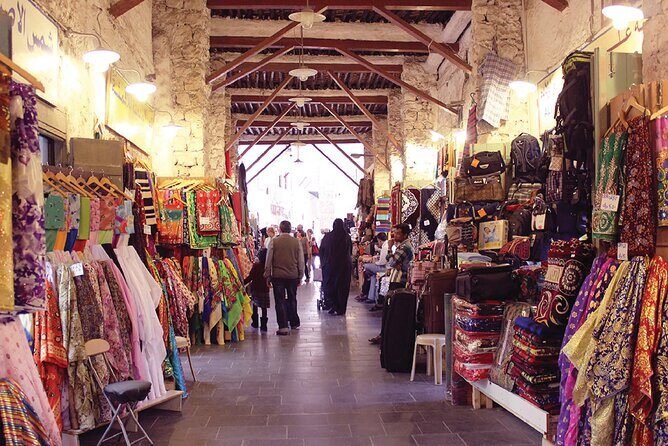
Souq Waqif is one of those places where you can get turned around fast. Streets twist. One alley is all textiles, another becomes spices, then you spot jewelry storefronts where the detailing grabs your attention from a few steps away. Starting at the Gold Souq is smart because it gives your eyes a clear focus: intricate designs, ornate craftsmanship, and a sense of the market’s price range.
You’ll spend about 30 minutes here, which is enough to get oriented and pick out what you actually want to look at. The jewelry variety is the hook—delicate bracelets, elaborate necklaces, and pieces that span casual-market buys up through serious, high-end shopping. Even if you’re not buying, you’ll learn to spot quality cues just by seeing how different stalls present their work.
Practical tip: if jewelry shopping is on your list, decide in your head what you’re shopping for before the guide moves you along. In a place like this, wandering can eat up time quickly.
You can also read our reviews of more walking tours in Doha


Falcon Souq and the Falcon Hospital: more than a photo stop
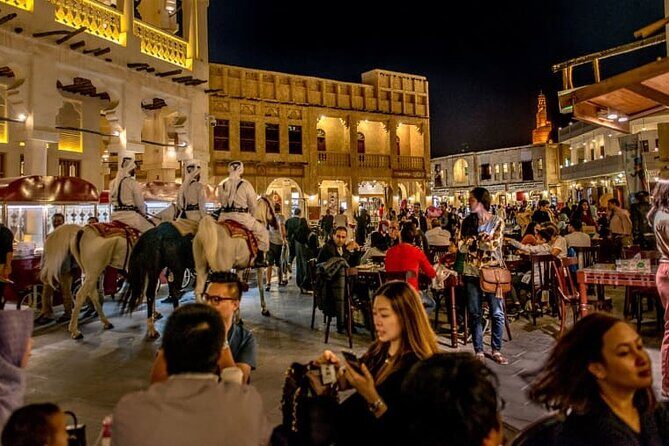
After the jewelry, the tour shifts gears in a great way. You head to the Falcon Souq / Falcon Hospital area for a close look at trained birds and a better understanding of the tradition behind falconry.
You’ll have about 20 minutes here, and the value is in what the guide helps you notice. It’s not just seeing birds. It’s learning why falcons are tied to Qatari heritage and how the market supports that world. There are also shops selling falconry gear, so you can connect the animal side of the experience to the equipment side you’d otherwise miss.
This is one of the most highly appreciated parts of the walk, and for good reason. It changes the tone of Souq Waqif from shopping-only to something more like a living trade. If you’re the type who likes seeing how traditions work in real life—inside the same place people come to trade—you’ll appreciate this stop.
A small consideration: some people want longer animal-focused time. The tour is set up as a balanced circuit, so if falcons are your main reason for coming, plan for extra time on your own afterward.
Camel Pen and the equestrian corner for horses
A short walk from the falconry area brings you to the Camel Pen and Emery Stable for Horses. This is where the souq feels distinctly Qatari. You’re not only surrounded by crafts and food; you’re seeing the animals that connect to local equestrian culture.
This part is quick—about 15 minutes—but it’s designed to give you a glimpse without dragging the whole tour. You’ll see camels and horses that play a role in local traditions, and you’ll come away with a more complete sense of what Souq Waqif is. It’s not just a theme-market. It’s a cluster of functions.
Practical tip: keep your phone out of the way unless you’re ready to step in. Some areas around animal pens can require careful footing and attention.
Textile Souq, spices, and pearls: how to shop-smart in 35 minutes
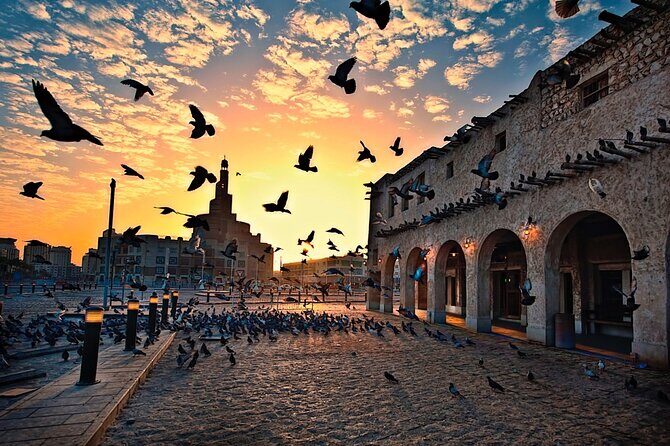
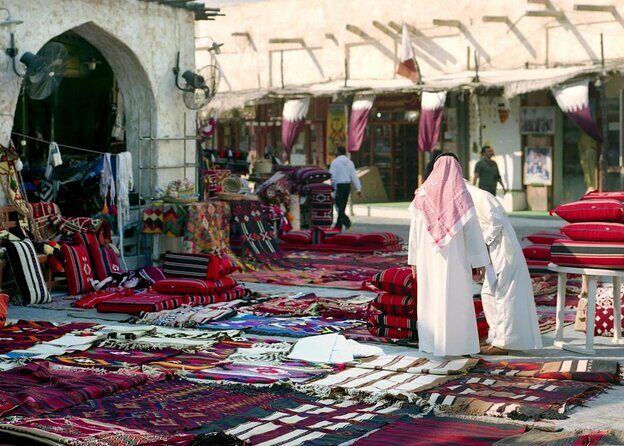
Next comes the portion people often love because it engages multiple senses at once. You’ll move through the Textile Souq, plus spice and pearl shops.
Expect about 35 minutes for this block, which is plenty to browse and compare without turning it into an all-day mission. You’ll see colorful fabrics and traditional garments, then shift to displays of spices. You also get a chance to look closely at pearls, which the tour frames with Qatar’s seafaring past—helpful context that makes the materials feel less random.
Here’s what I like about structuring this way: you’re not bouncing around the market randomly. You’re moving through related categories, so your brain can actually catalog what you’re seeing. That’s when souvenirs become more than impulse buys.
If you’re shopping, this is where you might want to ask questions of your guide—what each type of fabric is used for, how spices are commonly used, or what kinds of pearl pieces people typically look for. The tour is set up to help you do that.
A drawback: if you love textiles and want to study them deeply, you may feel rushed. The upside is you can always return later with your eye trained.
Souq Waqif Art Centre: a quiet reset during the walk
After the busy market zones, you get a calmer, indoor change of pace at the Souq Waqif Art Centre. This stop lasts about 20 minutes and gives you a different side of Doha than the shopping lanes.
You’ll see traditional and contemporary Qatari art in a gallery-style setting. The best part is that it’s not trying to compete with the noise outside. It’s a pause that lets you slow down, look, and take in creative work in a more thoughtful way.
If you’ve had museum fatigue elsewhere, this works because it’s compact. And if you’re the type who enjoys seeing contemporary culture alongside old-school craft, you’ll probably enjoy the mix.
You can also read our reviews of more city tours in Doha






Central Courtyard street food: snack planning without the stress
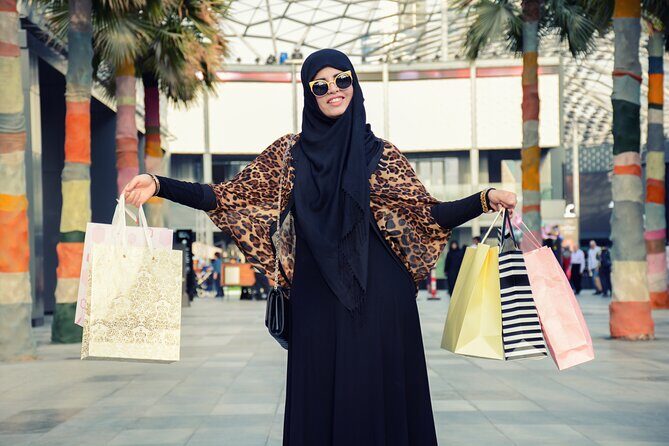
No Souq Waqif experience feels complete without eating. The tour includes time in the Central Courtyard, about 25 minutes, where you can grab street food.
This is where you’re likely to see options like shawarmas and sweets such as baklava. The tour also positions this as a practical break—so you don’t have to stop your walking plan cold and hunt for food while you’re getting tired.
Important note: meals aren’t included. So this stop is ideal for a snack or a lighter meal, but you’ll still need to budget for what you order. If you want a full sit-down dinner later, think of this as the energy boost that keeps you going through the last segment.
My advice: pick one savory and one sweet, then save the rest for later exploration. Souq Waqif is the kind of place where food shows up in waves.
Parisa Persian Restaurant: wrapping with a decorative finish
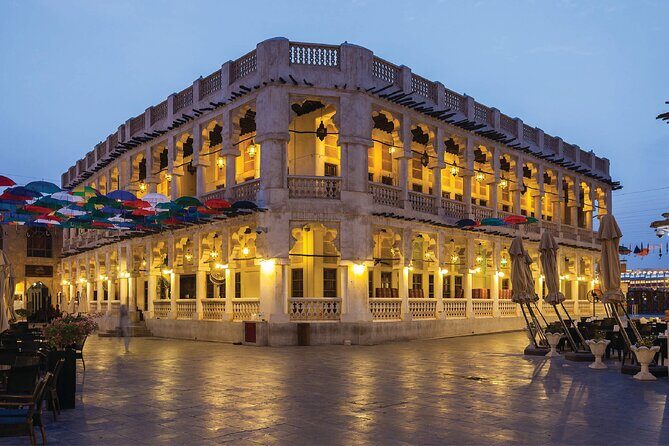
The final stop is a visit to Parisa Persian Restaurant, with about 15 minutes here. It’s known for authentic Persian cuisine and an over-the-top interior—mosaic work and mirrored walls that turn the dining room into a visual event.
Even though the tour doesn’t include meals, this stop can still be worth it. You get a chance to see the space, soak in the design, and decide whether you want to return for a proper dinner on your own.
This is a good way to end the walk because it gives you a different “type” of experience: less browsing, more atmosphere. After hours of markets, your brain likes a change in texture—literally and visually.
Price and value for a private 3-hour Souq Waqif walk
At $110 per person for a roughly 3-hour private walking tour, you’re paying for three main things: a guide who can steer you through the maze, time-efficiency, and add-on access to stops that give more meaning than a random walk.
What you get that adds up in real life:
- Professional guide throughout (this is the big one)
- Bottled water
- Time at multiple market zones and curated stops (jewelry, falconry, animal culture, textiles/spices/pearls, art, and food areas)
Also, admission for each listed stop is shown as ticket free, which helps you avoid surprise costs at the doors. The trade-off is that you’ll still pay for your own food and any shopping you choose to do.
The tour’s popularity shows in the lead time: it’s typically booked about 61 days in advance. If you’re traveling during a busy season or on a tight schedule, locking in a slot sooner is smart.
Start times matter too. The walk offers several options, and one key practical note I’d take from the general experience of Souq Waqif: hot weather can affect when the souq runs at full speed, so matching the tour start time to your comfort level is worth it.
And yes, you’ll be walking. Comfortable shoes are not optional.
Tips for getting the most out of the guide-led experience
Here’s how I’d make this tour pay off:
- Use the guide early. The first stretch through the Gold Souq is the best moment to ask what you should pay attention to later in the market.
- Ask about falconry gear. If you’re curious, the Falcon Hospital/Falcon Souq stop pairs birds with equipment, so you get context in one go.
- Don’t skip the animal stops just because they seem short. Those 15–20 minute segments are the difference between seeing a market and understanding a culture.
- Plan your shopping budget. Jewelry and pearls can run from affordable to serious money, so it helps to know your limit before you start collecting images.
- Treat food as a snack stop, not a full meal, since meals aren’t included.
Guide quality seems to be a strong point. Names that come up include Sohail, Moustafa, and Saleh—people specifically praised for friendliness, organization, and pairing market facts with practical recommendations like where to eat afterward.
Who should book this tour (and who might want a different plan)
This is a strong fit if:
- You’re in Doha for a short time and want a guided route that covers more than shopping lanes
- You like seeing cultural layers—falconry, equestrian traditions, crafts, and art
- Your group values private attention and a smoother flow than a crowded walk
It might not be the best fit if:
- You want a long, self-paced shopping spree with minimal structure
- You only care about one category (like jewelry) and want hours devoted to that alone
- You’re skipping street food and planning to eat only at specific restaurants, since the food stop is built into the tour flow
Should you book Souq Waqif through the Eyes of Locals?
I’d book it if you want your first Souq Waqif visit to feel organized and meaningful. The mix of Gold Souq, falconry, equestrian culture, textiles/spices/pearls, art, and a food break hits a lot of different interests without requiring you to build a route yourself.
If you’re a serious shopper, add extra time before or after so you can circle back where something catches your eye. But as a focused introduction—guided, private, and about 3 hours long—it’s an easy way to get your bearings fast and leave with a sense of how Souq Waqif functions day to day.
FAQ
How long is the Souq Waqif walking tour?
The tour is about 3 hours.
Where does the tour start and end?
It starts at Souq Waqif Falcon Hospital, Al Souq St, Doha, Qatar, and ends back at the same meeting point.
How much does it cost?
The price is $110.00 per person.
Is the tour private?
Yes. It’s a private tour/activity, and only your group participates.
What’s included in the price?
It includes bottled water and a professional guide.
Are meals included?
No. Meals aren’t included, though the tour includes time at food spots.
What sites are visited during the tour?
You’ll visit the Gold Souq area, the Falcon Souq/Falcon Hospital area, the Camel Pen and Emery Stable for horses, the Textile Souq plus spice and pearl shops, the Souq Waqif Art Centre, a Central Courtyard street food stop, and a visit to Parisa Persian Restaurant.
Are there multiple start times?
Yes. The tour offers several start times throughout the day.
What kind of ticket do I need?
You’ll have a mobile ticket.
What’s the cancellation policy?
You can cancel for a full refund up to 24 hours in advance of the experience’s start time. If you cancel less than 24 hours before, the amount paid isn’t refunded.
You Might Also Enjoy



More Walking Tours in Doha

More Tours in Doha



More Tour Reviews in Doha
- Qatar Gold Dune Safari, Dune Bashing,Camel Ride,Sand Boarding,Inland Sea Desert
★ 5.0 · 2,807 reviews