REVIEW · DOHA
Doha North Qatar Tour Zubara Fort, Mangroves, Jumail Village
Book on GetYourGuide →Operated by Adventure Time Tourism · Bookable on GetYourGuide
Pearls, mangroves, and fort walls in one day. What makes this trip interesting is the mix of working-waterfront history in Al Khor and the quiet nature pause in Al Thakira mangroves, then a straight shot into the story told by Al Zubara Fort. I especially like how the stops connect: fishing and ship work first, then a UNESCO fort, then the empty homes at Al-Jumail. One drawback to plan for: food isn’t included, so you’ll want to handle lunch or snacks on your own.
This is a small-group tour (up to 6) in an air-conditioned SUV/jeep with a live English guide, and the day runs about 270 minutes total. I like the pacing: you get real time at each place for photos and questions, not just quick roadside peeks. My main consideration is that it’s a lot of riding and short visits, so if you want long walks or deep museum time, you may want to pair this with an extra stop on a separate day.
If you’re coming to Qatar mainly for Doha’s skyline, this is a smart way to get the older side of the country without fuss. You’ll see how the north was shaped by the sea, the fort’s coastal defense, and the way people lived in traditional Qatari villages—then you’ll head back to Doha with a clearer sense of how the place got from then to now.
In This Review
- Quick hits before you go
- The big idea: a north-Qatar circuit in 4.5 hours
- Doha to Al Khor: the harbor that once ran the show
- Al Thakira mangroves: a calm break where birds and water talk
- Al Zubara Fort at UNESCO scale: walls built for defense and heat
- Al-Jumail abandoned village: history you can feel in empty space
- The guide makes the day: English storytelling in a small group
- Price and value: what $59 actually buys you
- Timing, heat, and photo strategy for a 270-minute day
- Who this tour suits best
- Should you book? My straightforward take
Quick hits before you go
- Al Khor harbor shows how pearl work and fishing centered here in earlier times
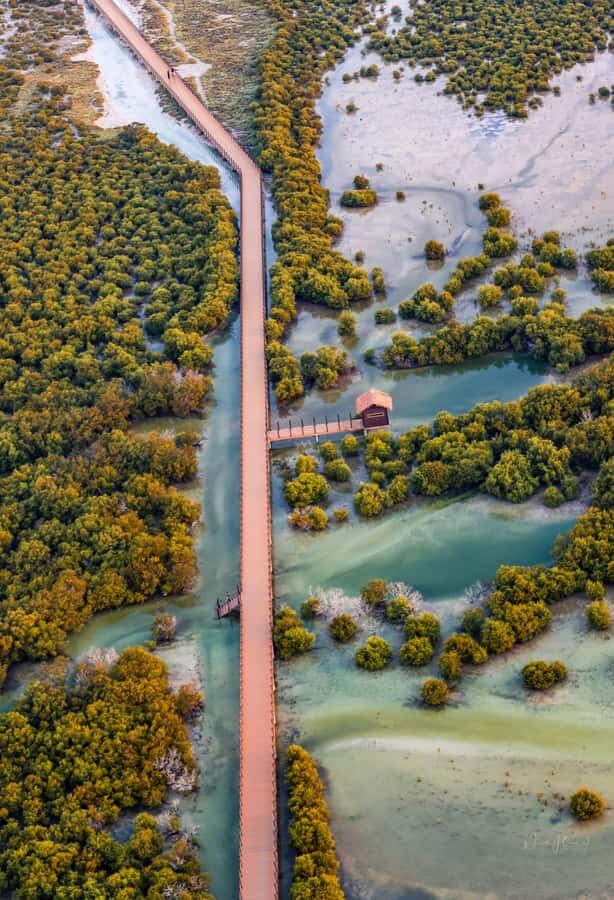
- Al Thakira mangroves are described as among Qatar’s oldest and largest forests
- Al Zubara Fort is tied to a UNESCO-listed archaeological site and includes a museum
- One-meter-thick fort walls were built to help keep rooms cooler in hot weather
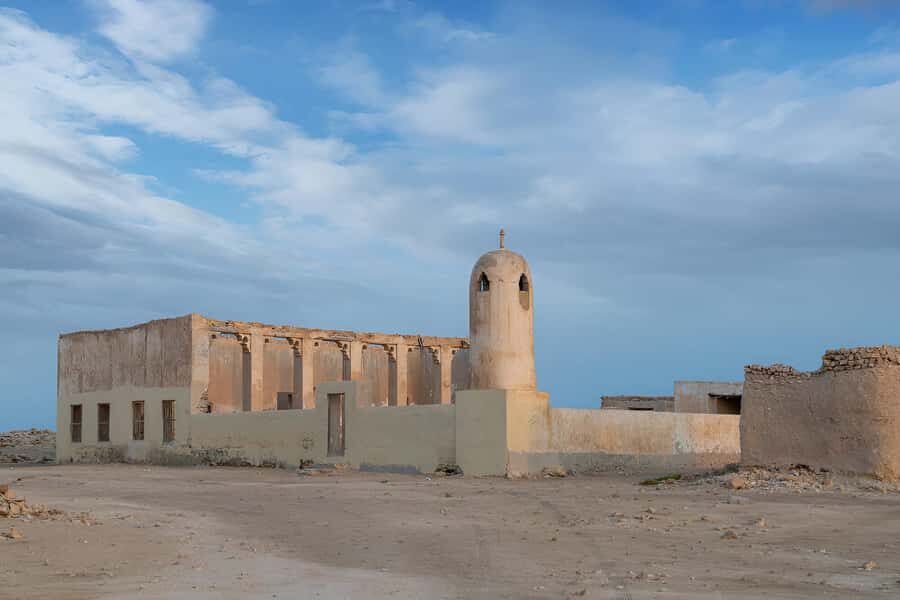
- Al-Jumail abandoned village lets you see a traditional Qatari village in decay and silence
- Small group size (up to 6) makes questions feel normal, not rushed
The big idea: a north-Qatar circuit in 4.5 hours
This tour is built around a simple theme: the north of Qatar where the sea mattered, forts guarded coastlines, and villages rose near resources. You cover four main stops—Al Khor harbor, Al Thakira mangroves, Al Zubara Fort, and Al-Jumail—then return to Doha.
The duration matters. At 270 minutes total (about 4 hours 30 minutes), it’s long enough to feel like a real outing, but short enough that you’re not spending the whole day in a vehicle. Most stops are around 15 to 20 minutes, which means you’ll want to use that time on purpose: ask questions, take your photos early, and don’t wait until the last two minutes to wander.
Also, the tour is priced at $59 per person, which is often a sweet spot for what you actually get: guided storytelling at multiple sites plus air-conditioned transport and bottled drinks. Since food isn’t included, you’re basically paying for the experience and the movement—not a full meal.
You can also read our reviews of more tours and experiences in Doha.



Doha to Al Khor: the harbor that once ran the show

You start with pickup in Doha, then head north in an air-conditioned SUV/jeep. The drive to Al Khor is about 50 minutes, which is plenty of time to settle in, especially if you’re traveling in a hot season.
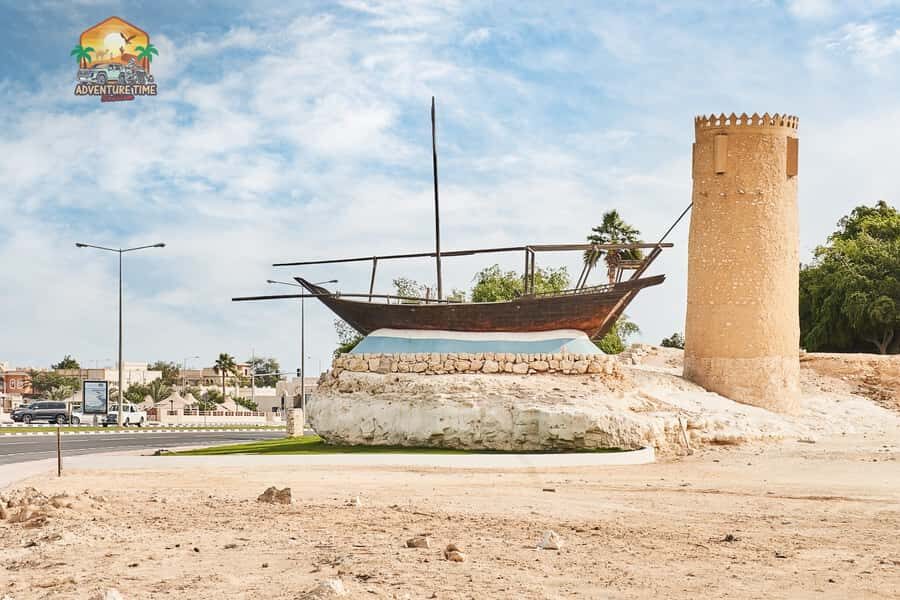
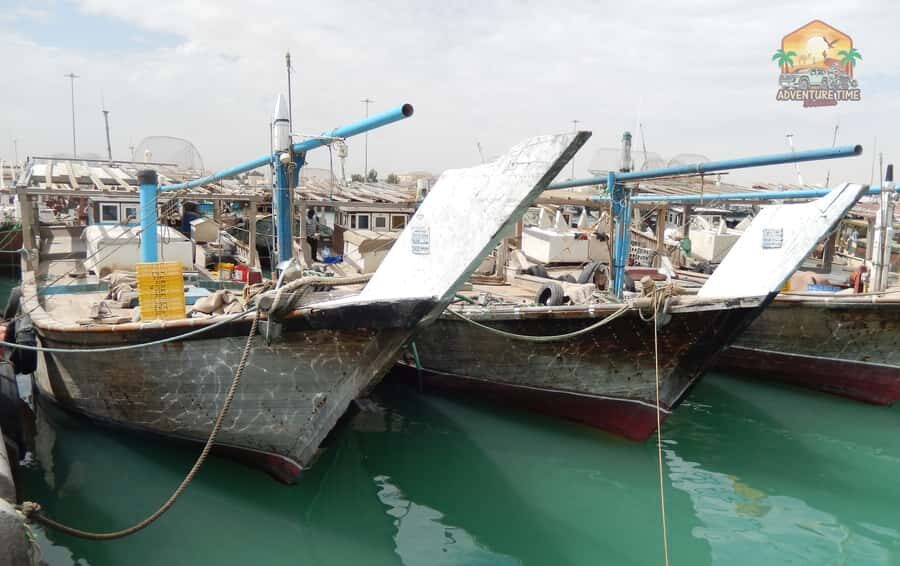
In Al Khor, the focus is the harbor—remember, this is Qatar’s coastline that historically supported pearl work and fishing. The tour also highlights older ship repairing and renovation yards. That’s a key detail because it shifts the story from romantic postcards to the practical side: boats needed maintenance, and coastal communities formed around that work.
What to do with your time here
- Use the 20-minute window to look at how the port area is laid out rather than just taking one photo and moving on.
- If you like history, ask your guide what daily life looked like when the sea economy drove everything.
- Take a quick walk around viewpoints, but keep an eye on time—this stop is short by design.
The trade-off: you only get a snapshot. Al Khor is big enough that one stop can’t cover every angle, so think of this as an orientation: where to look and what to notice before you decide if you want a longer repeat visit later.
Al Thakira mangroves: a calm break where birds and water talk
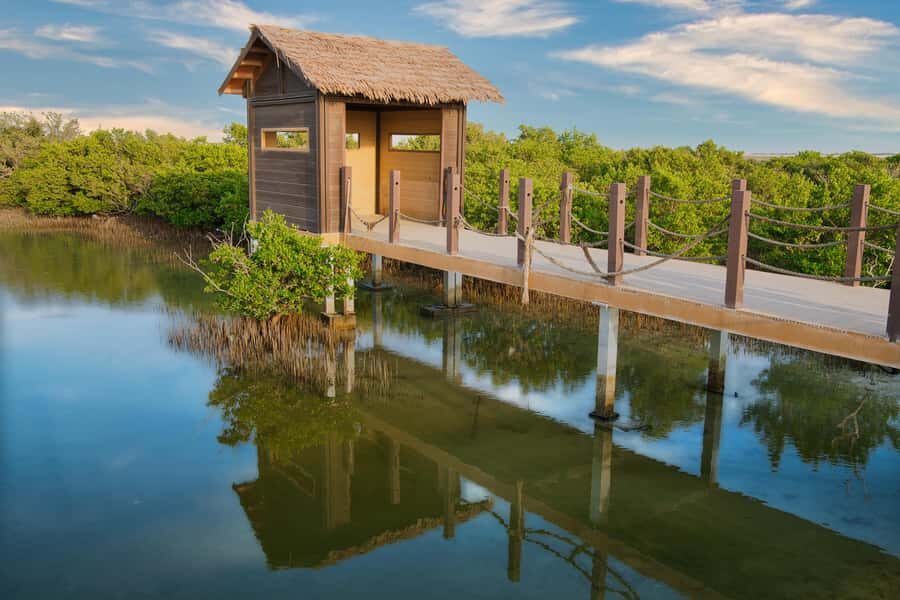
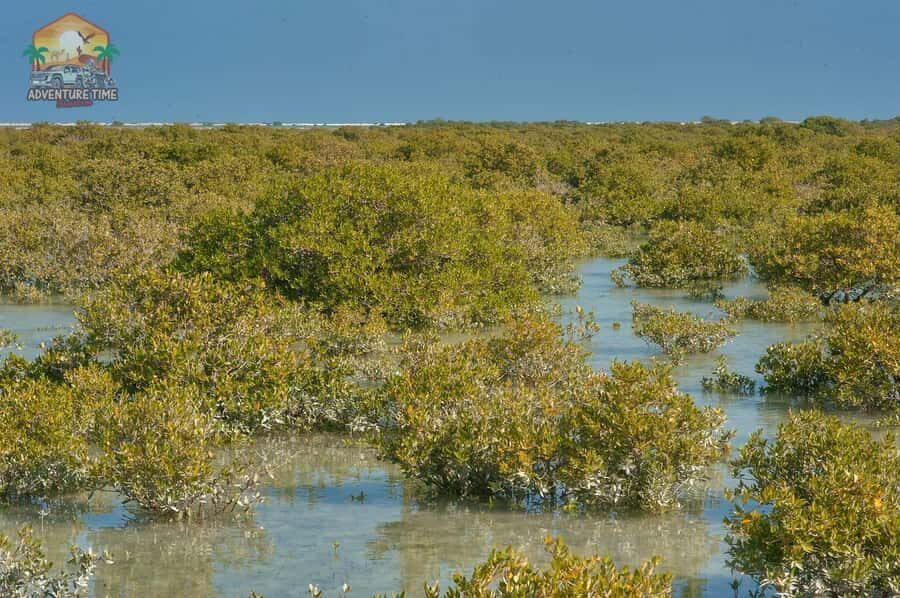
After Al Khor, the tour heads to Al Thakira mangroves forest. You’ll have about 20 minutes at the mangroves area for a photo stop, a guided tour, and sightseeing around the scenery.
This is one of those places where the value isn’t a single monument—it’s the change in mood. In Doha you get city speed; here you get slower time. The tour frames these mangroves as among Qatar’s oldest and largest forests, which is a big reason this stop feels more than decorative. Mangroves also act like natural systems on the edge of the sea, and your guide’s explanation tends to connect that to how people historically used coastal resources.
Some visitors refer to viewpoints and nearby areas with a nickname like Purple Island during the mangrove visit. Since the tour doesn’t treat that as the main official label, treat it as a helpful local pointer for where to stand for photos and airflow.
How to make mangroves work for you
- Go for the light: early minutes are usually best for photos.
- If you’re the question-asking type, ask about why these forests are described as some of the oldest and largest in Qatar.
- Bring a hat and sun protection. Even in shaded areas, it’s still Qatar.
Possible drawback: 20 minutes goes fast. If you want a long nature walk, this isn’t that kind of outing. Think of it as a guided taste and a reset.
Al Zubara Fort at UNESCO scale: walls built for defense and heat
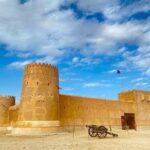
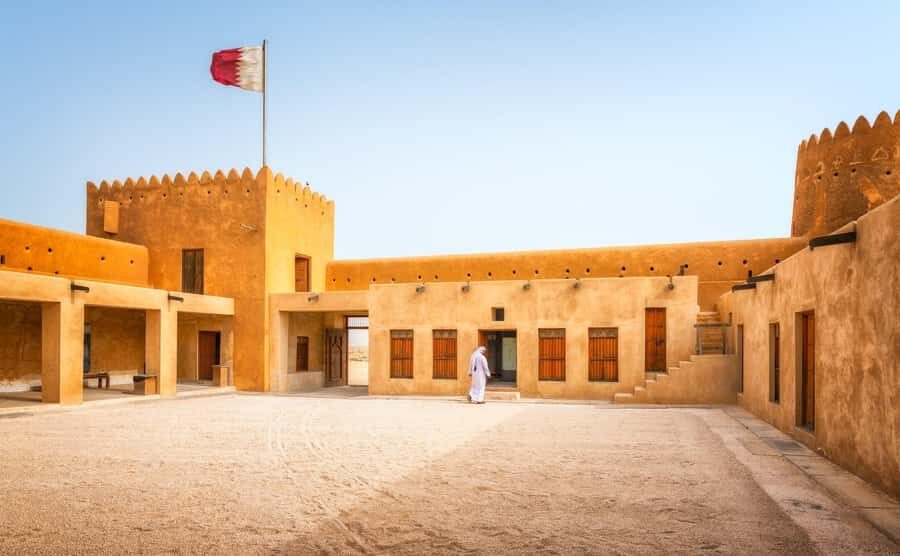
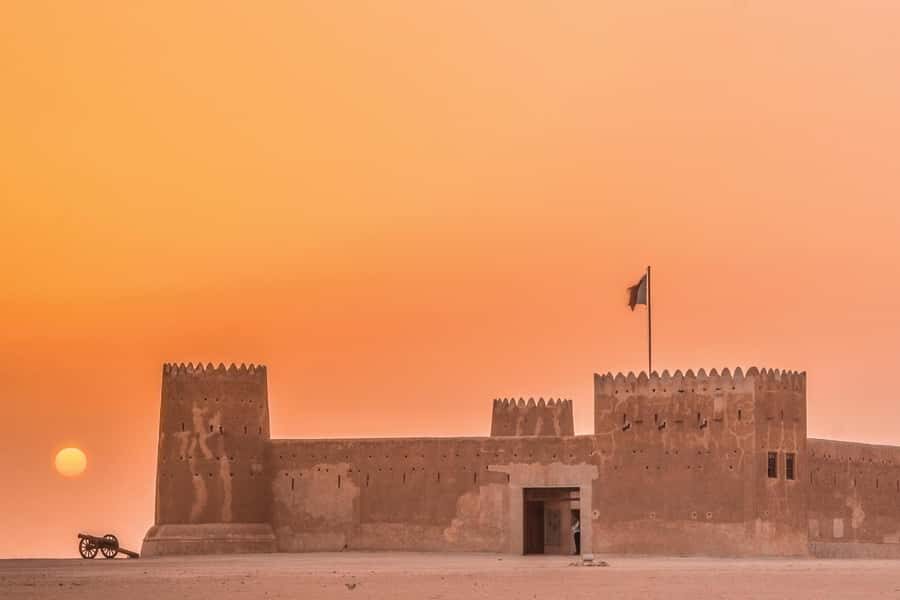
The biggest historical anchor on this day is Al Zubara Fort, part of the Al Zubarah Archaeological Site, recognized by UNESCO. You’ll get about 20 minutes here, starting with a photo stop and then a guided visit and sightseeing.
Here’s what makes this fort more than a pretty shape:
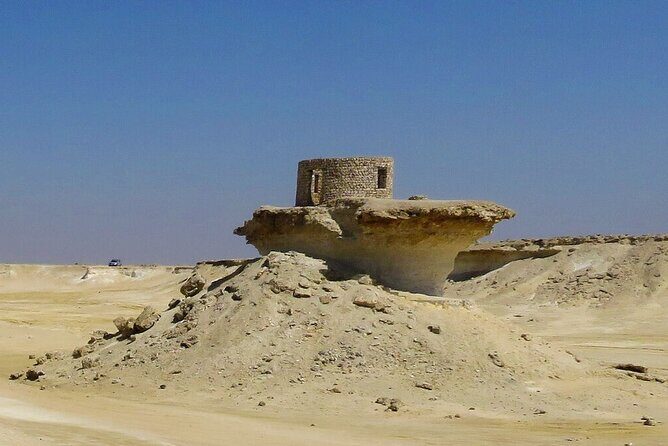
- The fort is described as a typical Arab fort, with one-meter-thick walls built to guard against invaders and help keep rooms cooler during hot summer conditions.
- It was originally built by Sheikh Abdullah bin Jassim Al Thani in 1938 as a coast guard station.
- Today it functions as a museum, showing exhibits and artworks with a focus on contemporary archaeological findings.
- The UNESCO listing also emphasizes preservation and the way the site represents a formative period.
In plain terms, this is a place where you can see architecture serving two jobs: defense and climate control. Qatar’s coast was exposed, and the fort’s thickness wasn’t a decorative choice.
How I’d use your 20 minutes
- Start by circling your attention around the walls. Look at thickness, not just height.
- Ask how the fort’s coast guard role fits into the broader military life of Qatar in the 18th and 19th centuries—the tour connects the fort to that wider era.
- Spend your last few minutes inside the museum area (if accessible during your visit) to link what you see outside with what the exhibits say inside.
Trade-off to know: You’re not getting an all-day museum session. The fort is important, so this tour gives you the core story and key visual cues. If you want deeper reading time, you’d need to come back separately.
Al-Jumail abandoned village: history you can feel in empty space
After the fort, you’ll drive to Al-Jumail Abandoned Village for about 15 minutes. There’s a photo stop plus a visit and sightseeing.
An abandoned village can be emotionally tricky if you expect it to feel like a living attraction. That’s not the point. The value here is in how you interpret absence: traditional Qatari village life, now reduced to forms, walls, and the shape of what once stood there. It’s a different kind of learning—less about artifacts under glass and more about how settlements were arranged in relation to the coast and daily needs.
In short: this stop is where the north stops being a history lecture and becomes something you can visually map with your own eyes.
How to get more out of Al-Jumail
- Take a few minutes to orient yourself: where you think the main spaces were, how homes might have faced inward, and what views seem available.
- If your guide is on a storytelling roll (many are), ask them to explain what people did day to day before modern changes.
- Keep your pacing respectful; you’re looking at a site that’s lost its original function.
Possible drawback: It’s brief. If you love slow wandering and long photos, this stop may leave you wanting more time than it gives.




The guide makes the day: English storytelling in a small group
One reason this tour earns such strong feedback is the human factor. You’re not stuck in a microphone tour. It’s a live guide, English-speaking, and the group limit is up to 6 participants. That size changes the whole vibe. You can ask a question without feeling like you’re cutting into a conveyor belt.
The names mentioned in connection with this experience include Nawaz, Abdul Sattar, Faisal, Muhammad Yasin, and Noor Raja. The consistent theme across those guide styles is clear explanations, patience, and a focus on Qatari culture and how daily life worked before oil and gas transformed the economy.
You’ll also have drinking water, plus tea or coffee included. That matters in Qatar. It’s not just hospitality; it’s practical comfort while you’re out in heat and sun.
What to expect in real time
- Your guide will explain each stop as you go, not just at the first location.
- You’ll likely get help with photos. Several guide styles in the feedback include making sure people get good shots, not just posing at the edge of a site.
- Coordination can be smoother when the guide uses quick messaging like WhatsApp—some guests highlight this style of communication.
Small caution: since it’s a group, your exact timing depends on your guide’s pacing and how long people want to talk at each stop.
Price and value: what $59 actually buys you
Let’s talk value like grown-ups. At $59 per person, you’re not paying for a luxury day trip. You are paying for:
- Pickup and drop-off from Doha
- Air-conditioned transportation in an SUV/jeep
- Bottled water and tea or coffee
- A live English guide who connects the dots between the sea, the fort, the mangroves, and the abandoned village
Food isn’t included, so lunch is on you. That’s the biggest cost you might underestimate. I’d budget extra for snacks or a meal, depending on what time you’re going and how fast you eat.
So when is this a good deal?
- If you want a guided route without the hassle of planning driving, timing, and what each stop means.
- If you want history and nature in one half-day, with enough structure to feel “covered” but not so much structure that you can’t ask questions.
- If you like small groups and want personal interaction.
When it might feel less worth it:
- If you only care about one stop (say, the fort) and you’d rather spend the rest of the day on your own.
Timing, heat, and photo strategy for a 270-minute day
Because this is a half-day format, timing is everything. The itinerary is built like a sequence of short site windows separated by drives. You’ll spend:
- About 50 minutes driving to Al Khor
- About 20 minutes at Al Khor
- About 15 minutes traveling to the mangroves area
- About 20 minutes at Al Thakira mangroves
- About 40 minutes to Al Zubara Fort
- About 20 minutes at the fort
- About 15 minutes to Al-Jumail
- About 15 minutes at the abandoned village
- About 75 minutes back to Doha
That means you should treat each stop like a timed mission:
- Decide what your must-photograph is before you get out of the vehicle.
- Ask your one or two best questions early at each site, not at the end.
- Don’t count on time to do everything twice.
Weather matters, too. Qatar can feel harsh, especially outside. The fort itself is described as having design choices meant to reduce heat inside—still, you’ll want basic sun habits: hat, water (included), and sunscreen.
Who this tour suits best
This tour fits you if:
- You want north Qatar without the stress of independent planning.
- You like a mix of UNESCO-level history (Al Zubara Fort) and nature (Al Thakira mangroves).
- You enjoy cultural storytelling and want it connected to architecture and daily life, not just dates.
It might be less ideal if:
- You want deep, slow museum time or long guided nature walks.
- You’re the type who gets frustrated by short stops and lots of moving between locations.
Should you book? My straightforward take
Yes, I think you should book this tour if your goal is a focused taste of north Qatar with a guide who explains what you’re looking at. The value is strong for the price because you get guided stops at multiple meaningful sites plus comfortable air-conditioned transport, and the small group size keeps it from feeling rushed.
Before you book, do two things:
- Plan for lunch or at least snacks since food isn’t included.
- Be honest about your pace. This is a 270-minute circuit with short site windows, not an all-day wandering day.
If you want Qatar beyond Doha’s skyline, this route gives you a clear, connected story—from harbor work to fort defense to mangrove quiet to an abandoned village you can read with your own eyes.
You Might Also Enjoy
More Tours in Doha


More Tour Reviews in Doha
- Qatar Gold Dune Safari, Dune Bashing,Camel Ride,Sand Boarding,Inland Sea Desert
★ 5.0 · 2,807 reviews