REVIEW · DOHA
Doha: North Qatar, Purple Island, and Mangroves Guided Tour
Book on GetYourGuide →Operated by Royal Route tourism agency · Bookable on GetYourGuide
North Qatar slows you down quickly. On this private half-day run from Doha, you mix sea views at Al Khor harbor with a museum stop in the Al Zubara Fort, then cool off again near the Al Thakira mangroves.
I especially like how the day flows from working-waterfront Qatar (pearls, fishing, shipyards) to places that feel like a living time machine. The only real downside: food is not included, so you’ll want to plan for a snack or a drink strategy during the ride and stops.
With pickup from any location in Doha and a guide who keeps the conversation going in English or Arabic, this tour is a smart way to see northern Qatar without wrestling with directions.
In This Review
- Key highlights worth penciling in
- North Qatar in a half-day: why this circuit works
- Getting out of Doha: pickup, drive time, and comfort in the heat
- Al Khor harbor: pearls, fishing, and the seaside workday
- Al Khor’s Purple Island: a photo stop with real mood
- Al Thakira mangroves: birds, calm water, and a chance to move
- Al Zubara Fort: UNESCO grounds and why the walls mattered
- Al Jumail abandoned village: tradition you can see from the road
- Guide quality: the difference between seeing and understanding
- Food, timing, and what to do with a half-day
- Price and value: is $62 per person fair?
- Who should book this North Qatar tour
- A quick packing checklist before you go
- Should you book this tour or skip it?
- FAQ
- Where does the tour pick up and drop off?
- Is this a private tour?
- What are the main stops on the route?
- Can I kayak or go bird watching in the mangroves?
- What is included in the $62 per person price?
- Is food included?
- What should I bring with me?
- What languages does the guide speak?
- What if my plans change before the tour?
Key highlights worth penciling in
- Al Khor harbor’s old-school role in pearl diving and fishing, plus a look at the ship repair and renovation yard
- Al Khor’s Purple Island stop for dramatic color and camera-friendly scenery
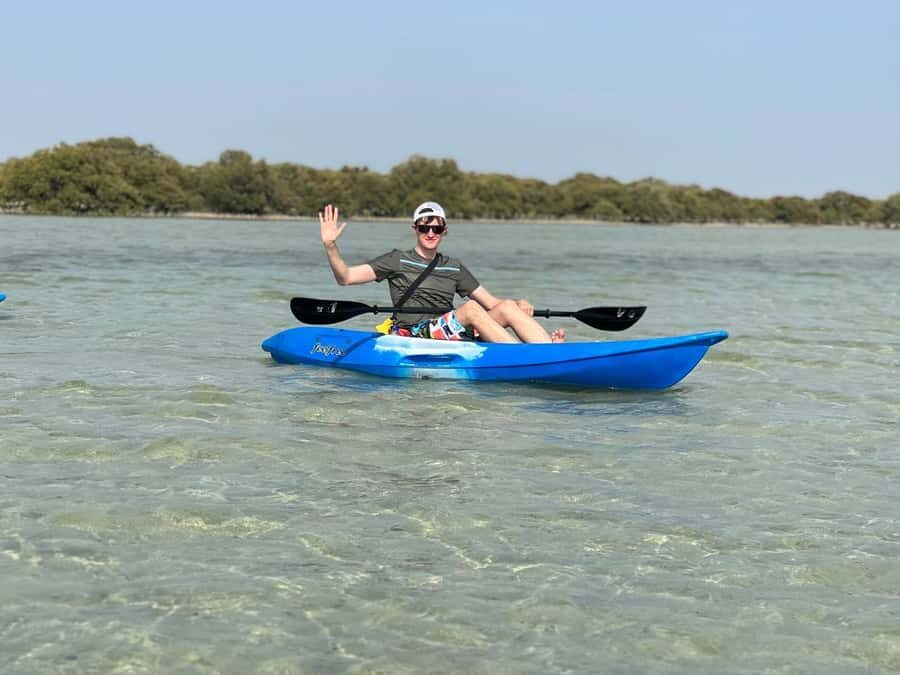
- Al Thakira mangroves for bird watching, and it’s described as an area where kayaking fits naturally
- Al Zubara Fort (UNESCO), built in 1938 and now used as a museum-style site showing archaeology and local life
- Al Jumail abandoned village, viewed along the drive for traditional Qatari “then and now” contrast
- Guides who answer your questions (with names like Muzzi, Umer, Gulraiz, Fahad, and Ali showing up in the guide lineup)
North Qatar in a half-day: why this circuit works
This tour is built around contrasts, and that’s what makes it satisfying even when you only have a few hours. You start on the coast, shift to mangrove nature, then land at one of Qatar’s most important heritage sites. After that, you finish with the quiet impact of an abandoned traditional village.
The format also helps you avoid a common Qatar problem: you can spend days bouncing between sights with no real context. Here, a guide ties together what you’re seeing—harbor work, coastal defense, and the survival patterns of people living in this part of the peninsula.
Private transport matters too. It’s an air-conditioned vehicle, and the route is designed for comfort on a hot day. One review specifically praised the AC, which tells me you won’t be guessing whether the car will feel survivable.
You can also read our reviews of more guided tours in Doha

Getting out of Doha: pickup, drive time, and comfort in the heat
Pickup is from any location in Doha. That sounds simple, but it’s genuinely useful if you’re staying outside the most tourist-heavy areas. You’re not forced into a fixed meeting point, which can steal time from a half-day plan.
The vehicle is air-conditioned, and you’re provided bottled water. That combo is not a minor detail in Qatar. It changes how you experience each stop. If you’re not baking in the car before you even arrive, you can actually enjoy the harbor views and take your time around the fort.
One more thing: while it’s a half-day tour, the pace can stretch a bit depending on photo stops and questions. If you like to stop often, plan for the possibility that you’ll end up closer to five hours rather than a tightly scheduled block.
Al Khor harbor: pearls, fishing, and the seaside workday
Al Khor Harbor is the first big stop, and it’s a strong opener. In older times, this area was known for pearl diving and fishing, and the vibe is tied to work—boats, repair yards, and the practical rhythm of life by the sea.
You’ll explore the harbor and get a view of the old ship repair and renovation yard. That’s the kind of detail many “sightseeing” tours skip. Here it helps you understand why coastal Qatar mattered so much: the ocean wasn’t just scenery. It was an industry.
If you like learning how places functioned, this is where the guide earns their keep. You’ll get explanations that connect traditional pearl diving and fishing to what you can still sense in the waterfront layout. Even if you’re not a history nerd, it makes the later fort stop easier to interpret—because you see the people, not just the buildings.
Al Khor’s Purple Island: a photo stop with real mood
After the harbor, the itinerary includes Al Khor’s Purple Island. The name alone is enough to pull you in, but what matters for your planning is how it fits the day: it breaks up the “heritage mode” with something visual and atmospheric.
You can expect this to be a short, scenery-focused stop. Bring your camera, and come ready for color that may look different depending on light and conditions. If your group is into photography, this is a good moment for extra time—especially if you don’t mind waiting a bit for angles.
Practical tip: wear something comfortable for walking and keep water with you. Even a quick stop can feel longer when you’re shooting photos in the sun.
Al Thakira mangroves: birds, calm water, and a chance to move
Then comes the mangroves—Al Thakira Mangrove Forest. This is described as one of Qatar’s under-visited nature spots, and that matches the best reason to include it on a heritage route: it resets your senses.
Here’s what to expect based on the tour description. The mangroves are an ideal spot for kayaking and bird watching. Even if you don’t kayak, the setting is built for slow attention. You’re surrounded by a coastal ecosystem that feels different from the urban coast and different again from the desert edges people often imagine.
The best value of this stop is not just “nature.” It’s the contrast in pace. Harbor and fort are structured, man-made, and history-driven. Mangroves are about observation—watching birds, noticing water movement, and letting the scenery take over for a bit.
If you travel with someone who needs a break from museums, this is often the moment that keeps the day balanced.




Al Zubara Fort: UNESCO grounds and why the walls mattered
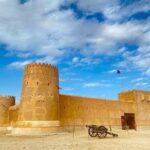
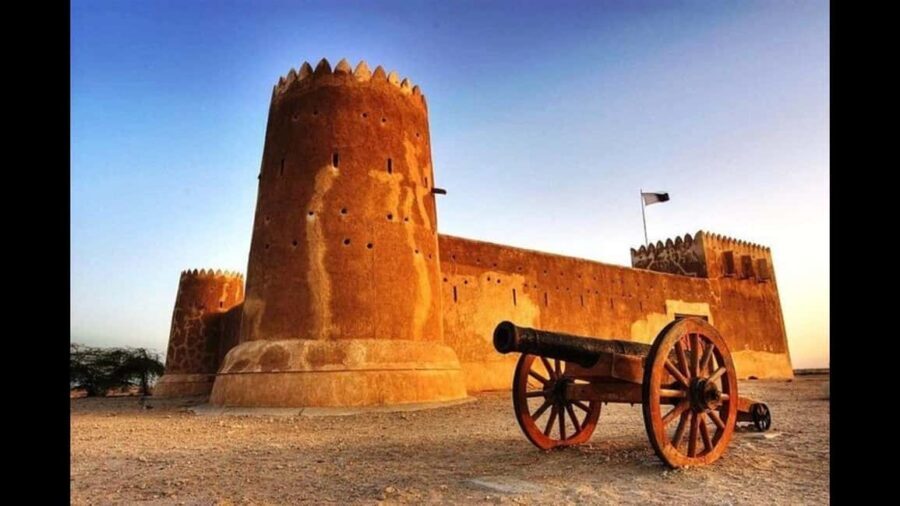
Al Zubara Fort is the centerpiece. It’s listed by UNESCO and presented as an archaeological site and museum-like experience. The fort takes you back to an earlier era of northern Qatar, with the layout and setting helping you imagine the purpose of the place.
One standout detail: it was originally built by Sheikh Abdullah bin Jassim Al Thani in 1938 as a Coast Guard station. That matters. This isn’t a random fort stop. It’s tied to coastal security and maritime life—exactly what you started seeing at Al Khor Harbor.
You’ll also hear that the fort’s walls stay cold in summer. That’s more than a fun fact. It tells you how design worked with climate. When you stand in the spaces and look at the thick structure, you can understand why “fort” in Qatar didn’t only mean defense. It also meant survival.
Today, the fort serves as a museum and displays artworks and exhibits focused on archaeology and topical findings. The story also points to military life in Qatar in the 18th and 19th centuries, which gives the site meaning beyond architecture.
If you like context, ask your guide about the link between the fort’s coast-guard role and the older pearling/fishing economy you saw earlier. That connection makes the day feel like one coherent narrative, not five separate stops.
Al Jumail abandoned village: tradition you can see from the road
On the drive, you may view and enjoy the old traditional Qatari abandoned villages, including Al Jumail. This stop is different from the fort. You’re not entering a museum building. You’re witnessing the quiet outcome of time on a settlement.
The tour description frames Al Jumail as an abandoned village tied to the Zubara area. That’s the key takeaway for you: the village gives you a “people and place” perspective. Forts explain defense and control. Abandoned villages explain daily life, settlement patterns, and the way communities once organized themselves around resources.
Even if this isn’t the most comfortable stop for photos (depending on what you can see from your position), it’s the kind of moment that turns a cultural tour into something memorable. It adds a feeling of scale: Qatar’s heritage isn’t only castles and forts. It’s also the places where ordinary life happened.
Guide quality: the difference between seeing and understanding
One reason this tour works well is the guide tone. Several named guides—Muzzi, Umer, Gulraiz, Fahad, and Ali—show up with consistent traits: they explain the areas visited and answer questions. You’re not stuck with one-direction lectures.
You’ll also feel it in how the day runs. Pacing is mentioned as unhurried. One write-up highlighted that the tour didn’t feel rushed, and that there was time for lots of photos. Another praised punctual pickup and flexibility with pick-up and drop-off locations.
Here’s the practical side: if you like asking “why this, why here,” a good guide makes the itinerary feel valuable. If your guide keeps things moving but still answers your questions, you get the best of both worlds—context and time.
A quick tip: if you have specific interests (pearling era, maritime life, how forts functioned, mangrove ecosystems), tell your guide at the start. This tour’s structure is ideal for that kind of back-and-forth.
Food, timing, and what to do with a half-day
Food is not included. That’s the biggest planning detail you should take seriously. A half-day tour can still take enough time that you feel the gap between meals, especially in warm weather.
My practical suggestion: pack a snack you’re happy with and bring water even though bottled water is included. You’re not being asked to do a long hike, but you might spend time standing and walking at the harbor and fort. A small food buffer keeps the day comfortable.
Timing is flexible in a good way. If your group asks questions and wants more photo time, the itinerary can stretch. If you’re the type who loves to move at a steady pace and skip extra stops, tell your guide early so expectations match.
Price and value: is $62 per person fair?
At $62 per person, the price is reasonable for a private half-day tour that includes hotel pickup and drop-off in Doha, an English/Arabic guide, air-conditioned transport, and bottled water.
What you’re really paying for is more than driving. You’re paying for:
- context at Al Zubara Fort and the heritage stops
- a guided explanation that links harbor, fort, and settlement patterns
- convenience of pickup from any Doha location
- comfort with AC in the car plus water
The main trade-off is food. Since lunch isn’t included, you should treat the tour as a transport + guide + entry experience, then budget separately for snacks and meals.
If you’d otherwise spend time coordinating rides across northern Qatar, this package often adds up fast in value. You’re buying one organized morning/afternoon instead of multiple separate logistics.
Who should book this North Qatar tour
This tour suits you if you want northern Qatar but don’t want a full-day commitment. It’s especially good when you care about more than one theme. You get sea-life context at Al Khor, nature at Al Thakira, and deep heritage at Al Zubara Fort.
It’s also a solid choice if you appreciate guided interpretation. The fort in particular rewards a guide who can explain what you’re seeing—why it was built, how it functioned, and what the exhibits focus on.
And if you’re traveling with someone who doesn’t want only museums, the mangroves break up the format. The abandoned village gives a human layer to the day.
A quick packing checklist before you go
Bring a passport or ID card. Qatar customs and tours commonly require identity checks, and this tour explicitly asks for it.
For comfort: dress for warm weather and sun exposure. You’ll be outside at the harbor and likely at the fort viewing areas. If you’re sensitive to heat, that air-conditioned car becomes part of the comfort plan, not just a perk.
If you want photos, plan to slow down a bit. This route works well when you take your time.
Should you book this tour or skip it?
Book it if you want one well-organized half-day that mixes coastline work history, UNESCO heritage, and a nature stop you wouldn’t automatically plan on your own. The guide component makes a real difference here, especially at Al Zubara Fort where context matters.
Consider skipping (or adjusting expectations) if you only want a single type of attraction, like only museums or only nature. Also, if you’re not willing to snack on the go, remember food isn’t included.
Overall: this is a smart value play for people who want north Qatar without the hassle of stitching together multiple independent trips.
FAQ
Where does the tour pick up and drop off?
The tour includes hotel pickup and drop-off in Doha. Pickup can be from any location in Doha, and you return to your hotel at the end.
Is this a private tour?
Yes. It’s described as a half-day private tour from Doha.
What are the main stops on the route?
The tour visits Al Khor harbor, Al Khor’s Purple Island, the Al Thakira mangroves, Al Zubara Fort (UNESCO listed), and the abandoned village of Al Jumail.
Can I kayak or go bird watching in the mangroves?
Al Thakira mangroves are described as an ideal spot for kayaking and bird watching.
What is included in the $62 per person price?
It includes hotel pickup and drop-off in Doha, a guide, air-conditioned transportation, and bottled water.
Is food included?
No. Food is not included.
What should I bring with me?
You should bring your passport or ID card.
What languages does the guide speak?
The guide is available in English and Arabic.
What if my plans change before the tour?
You can reserve and pay later, and you can cancel up to 24 hours in advance for a full refund.
You Might Also Enjoy
More Guided Tours in Doha



More Tours in Doha



More Tour Reviews in Doha
- Qatar Gold Dune Safari, Dune Bashing,Camel Ride,Sand Boarding,Inland Sea Desert
★ 5.0 · 2,807 reviews