Qatar beyond Doha in one day. This private tour strings together UNESCO history, coastal nature, and strange desert art into a full-day drive that feels like a quick country sampler. You’ll head north toward Al Khor, then west into the Zekreet area for rock formations and Richard Serra’s famous steel installation.
I especially like the balance of stops: you get the built heritage of Al Zubarah Fort plus the outdoors time on the mangrove coast. I also like that the guide keeps the day moving at a human pace, with built-in time for photos rather than just rushing from one landmark to the next.
One consideration: it’s a long, mostly road-based day with no included meals, so you’ll want to plan for snacks and sun breaks—especially in hotter weather.
In This Review
- Key Highlights Worth Your Time
- What This North & West Coast Private Tour Is Really Like
- Pickup and the Real Rhythm of the 7–8 Hour Day
- Al Khor: Harbor Views, Dhow Boats, and Fish Market Energy
- Purple Island: Mangroves and the Purple Dye Backstory
- Al Zubarah Fort: UNESCO Fort Walls and the Pearl-Era Story
- Zekreet Rock Formations: Wind-Made Limestone Shapes
- Richard Serra’s Steel Plates in the Desert (East-West / West-East)
- The Value of a Private Guide and Built-In Photo Time
- Comfort, Food, and What to Pack for This Coast-to-Desert Route
- Who This Tour Fits Best (And Who Might Want Something Different)
- Should You Book This North & West Coast Private Tour?
- FAQ
- How long is the Discover Qatar’s Hidden Gems North & West Coast Private Tour?
- What is the price per person?
- Do you get pickup and drop-off?
- Is this a private tour?
- What’s included in the tour price?
- Are meals included?
- What if the weather is poor?
Key Highlights Worth Your Time
- UNESCO-level Al Zubarah Fort: a major heritage site tied to Qatar’s pearl-diving and trading past
- Al Khor harbor and fish market area: maritime life plus mangroves in the same stretch
- Purple Island’s mangroves and purple-dye story: nature and history in a low-key coastal walk
- Zekreet rock formations (wind-and-erosion shapes): surreal limestone “mushrooms” for photos
- Richard Serra steel plates in the desert: a modern art stop that actually works in this setting
What This North & West Coast Private Tour Is Really Like
This isn’t a checklist tour where you spend 15 minutes at each stop and race back to the car. It’s closer to a “route with reasons” day: you’re traveling across two different Qatar personalities—coast and desert—while still getting clear historical context.
The private format matters more than you’d think. With only your group, you can slow down when the light turns good, take an extra moment at a viewpoint, or spend a bit more time in the museum area at Al Zubarah Fort. If you care about photography, that flexibility is a real quality-of-life upgrade.
You also get a local guide, plus practical basics like water/tea and a snack. That small comfort detail matters on a full day outside Doha. The tour is built for people who like seeing how places connect: fishing culture in Al Khor, pearl-era trade at Al Zubarah Fort, and the stark desert canvas at Zekreet.
You can also read our reviews of more private tours in Doha


Pickup and the Real Rhythm of the 7–8 Hour Day
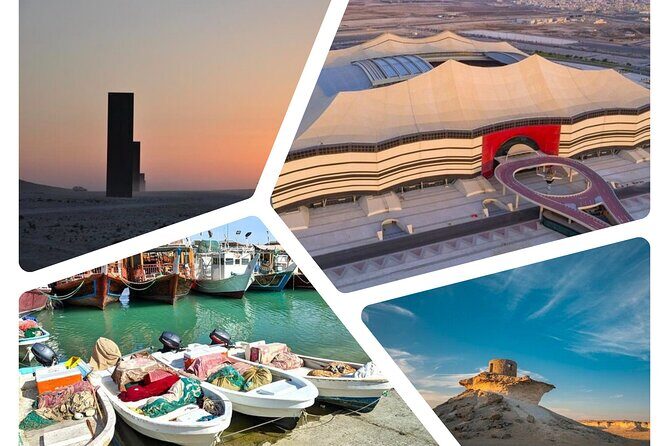
The day runs about 7 to 8 hours, and you get pickup with drop-off included via an air-conditioned vehicle. Pickup is available from your hotel, airport, or port, which makes it easier if you’re on a cruise or arriving the same day.
Here’s the flow in plain language: you start on the coast, add a short nature walk, pivot into a major UNESCO site, then finish with the Zekreet desert rock area and the Richard Serra installation. Between stops, you’ll be in the car—so I recommend dressing for both weather and driving comfort. In hot months, the air-conditioned ride helps, but you’ll still be outside at the viewpoints.
Also note the included time for each stop: some are shorter (like Purple Island and the Zekreet art stop), while Al Zubarah Fort gets a full hour. That hour at the fort is the “anchor” of the day, so if you want to read exhibits and absorb the setting, plan to spend most of your attention there.
Al Khor: Harbor Views, Dhow Boats, and Fish Market Energy
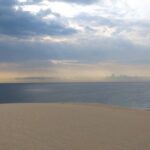
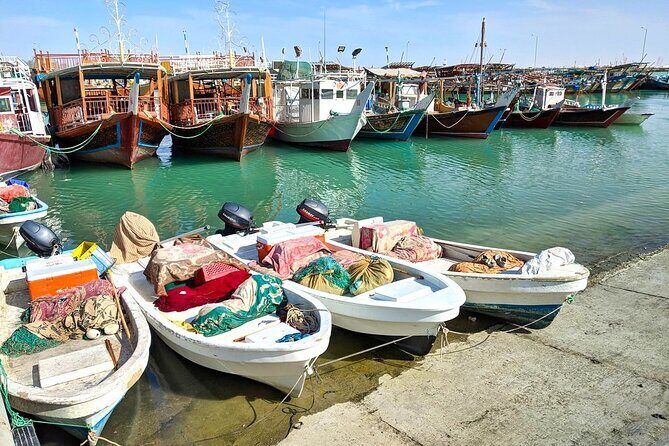
Al Khor is a coastal city with a maritime identity. You’ll start with the harbor area and see traditional dhow boats, plus time near the fish market. This is the kind of stop that doesn’t feel like a staged tourist set—it’s about everyday work along the water.
What I like here is the contrast. Before you jump into history-heavy Al Zubarah Fort, you get a living coastal snapshot: fishing culture, harbor activity, and the nearby mangrove environment. Even if you’re not a deep-dive into seafood markets, the sights and smells (in a normal, human way) help the rest of the day click.
The tour gives you about 2 hours for Al Khor, and there’s no admission ticket cost for this segment. That makes it a low-risk, high-reward start. Wear something comfortable for walking, and keep your camera ready—harbor scenes and boats are photo-friendly from multiple angles.
Purple Island: Mangroves and the Purple Dye Backstory
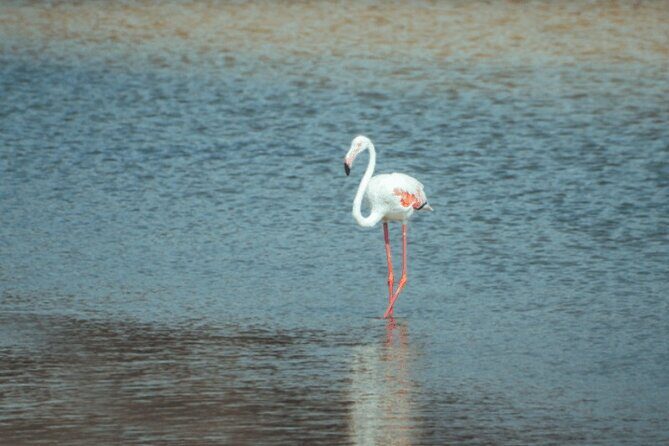
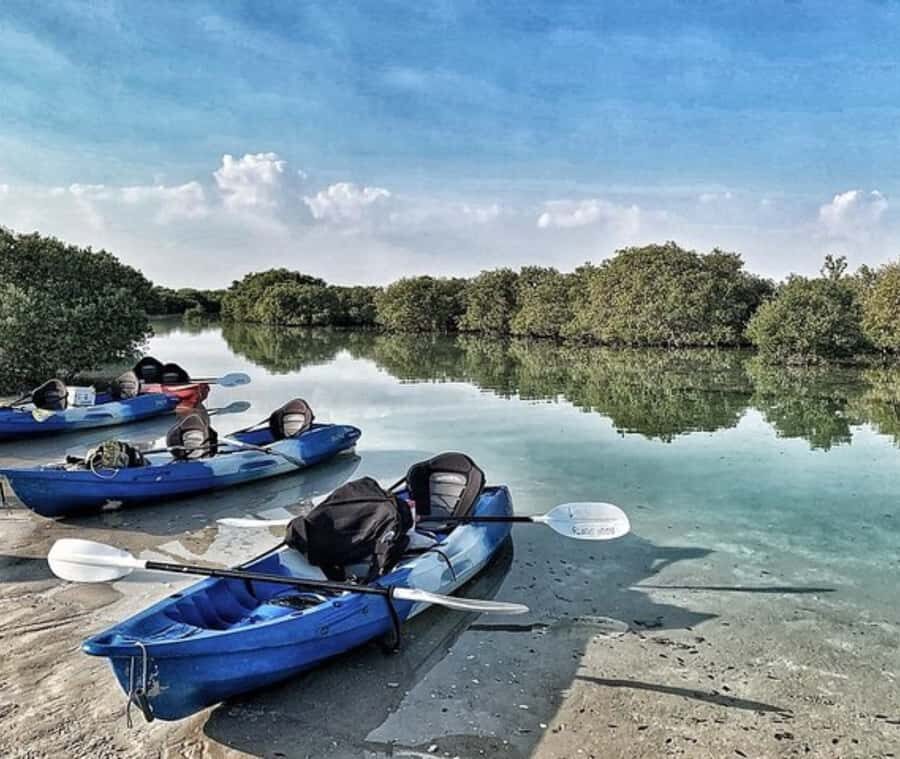
Next up is Purple Island, also tied to Al Khor Island. Expect about 1 hour here, and expect it to feel quieter than the harbor. The focus is nature: serene mangroves, biodiversity, and an added historical layer connected to purple dye production.
This is one of those stops where the “why” matters. Knowing there’s an ancient industry behind the landscape makes even a simple mangrove walk feel more purposeful. You’re not just looking at plants—you’re seeing how people used coastal resources long before modern Qatar.
If you enjoy birdlife and calm outdoor walking, this is the segment to lean into. Bring a little patience—mangroves are not about big dramatic scenery; they’re about small, living details and the sense of being in a sheltered coastal environment.
Also, this stop includes admission in the tour price, so you can focus on walking and observing instead of worrying about tickets.
Al Zubarah Fort: UNESCO Fort Walls and the Pearl-Era Story
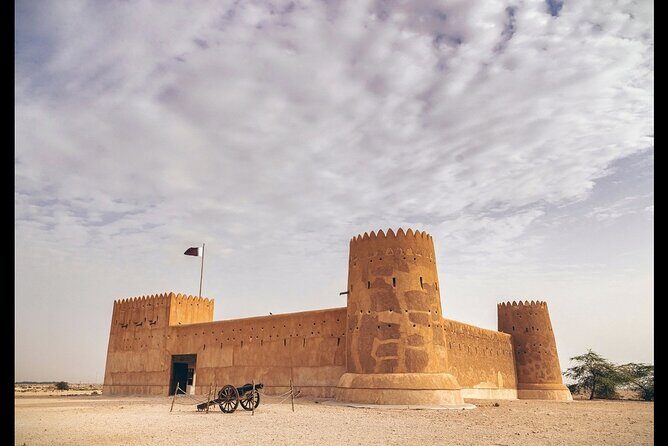
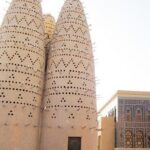
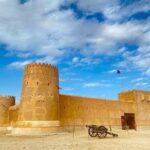
If the day has a “must-see,” it’s Al Zubarah Fort. It’s a UNESCO-listed site, and it’s tied to Qatar’s pearl-diving and trading past—an 18th-century coastal settlement that helped shape the region’s wealth and networks.
You get about 1 hour at the fort, plus admission is included. In that time, you can take in the striking fort architecture, then use the museum area to connect the buildings to the artifacts and story behind them.
What makes this stop valuable is that it doesn’t feel abstract. The fort structure is meant to protect and manage a trading community, and when you pair that with the earlier coastal context at Al Khor, the day becomes easier to understand. You start to see Qatar as a set of connected systems—water access, trade routes, and community life.
Drawback-wise, one hour can still be tight if you like reading everything slowly. If you’re a super-closer reader, aim to prioritize the museum areas and key displays, then spend the remaining time taking photos of the fort itself.





Zekreet Rock Formations: Wind-Made Limestone Shapes
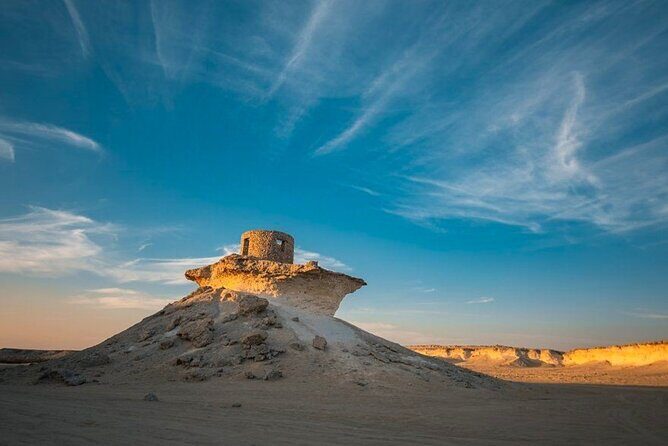
After the fort, you head to the Zekreet area and its rock formations. This is where the day turns from human history to raw natural shapes. You’ll have about 1 hour to explore the Zekreet rock formations around Zekreet Beach, with admission included.
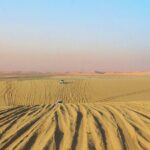
These limestone structures have been sculpted by wind and erosion over centuries, creating surreal, mushroom-shaped forms. In practice, that means the terrain rewards slow movement: you’ll spot different shapes from different angles, especially when the sun is lower.
If you’re thinking about photos, this is a great stop for wide shots plus close details. Because the formations are irregular, you’ll get better results by circling a bit rather than taking one straight “postcard” angle and calling it done.
One practical note: desert rock areas can be sun-heavy. Even if the day’s heat is managed by the car on the ride between stops, make sure you’ve got sunscreen and a hat, and keep water consumption steady.
Richard Serra’s Steel Plates in the Desert (East-West / West-East)
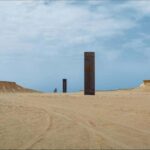
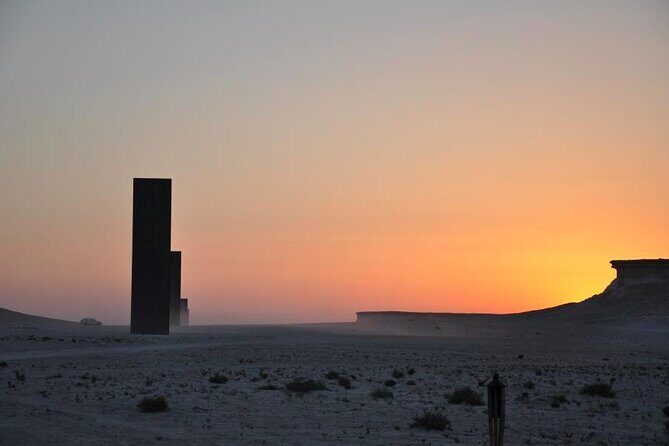
Next comes the modern art stop: Richard Serra’s East-West/West-East installation in the Zekreet desert. It’s a short 1-hour segment, and admission is included.
The installation is made from four towering steel plates. The interesting part is how those plates interact with the landscape around them. In an urban setting, you might treat it like a sculpture show. In the desert, it becomes more like a frame for the horizon and sky. The art doesn’t compete with the environment—it uses it.
For photographers, this is where timing matters. Even without a strict schedule you’ll still notice that the “look” changes as you walk around. Try different positions and angles; the structure’s lines and the desert’s plainness can create strong contrasts.
If you’re not usually an art person, don’t worry. This installation works because it’s outdoors, it’s large, and it’s placed where the surroundings are already dramatic.
The Value of a Private Guide and Built-In Photo Time

This tour earns its reputation through something simple: a good guide, plus the fact that the itinerary isn’t purely about transportation efficiency. You get a local expert guide who shares stories and helps you connect what you’re seeing.
One detail that can make the difference between a “good day” and a great one is photo pacing. A guide who understands timing will stop when the light is right and take extra care when you want a clean shot. The result is less stress for you and better photos.
If you’re lucky and your guide is someone like Bilal, you can expect a careful, supportive style—especially around photo stops and making sure the group feels taken care of throughout the day.
Also, since it’s private, the guide can answer your questions in real time. If you’re curious about pearl-era trade or why forts were built where they were, you’ll have the chance to ask instead of guessing.
Comfort, Food, and What to Pack for This Coast-to-Desert Route
The tour includes water/tea and a snack, plus entry fees for the major paid stops. Meals are not included, so you should treat the snack and drinks as fuel—not as a full substitute for lunch.
What I’d pack for this kind of day:
- Sun protection (hat/sunglasses/sunscreen) for Zekreet
- Comfortable walking shoes for harbor areas and any island paths
- A light layer for the car rides and for shade breaks
- Your camera or phone tripod if you like steady shots in open areas
The vehicle is air-conditioned, which helps a lot. Still, you’ll spend real time outdoors at multiple points, so dress like you’ll be outside more than you think.
One more practical tip: because some stops are shorter (around an hour), it’s smart to come ready to move. Small things like charging your camera, downloading offline maps, and having your lens cleaned before you leave Doha can save time and frustration.
Who This Tour Fits Best (And Who Might Want Something Different)
This is a great match if you want:
- History plus nature in one day
- A coastal start in Al Khor and a desert finish in Zekreet
- A private setup that feels calmer than group coach tours
- Photo-friendly stops, including the steel sculpture installation
It’s also a solid choice if you’re the type of traveler who likes “context.” The day gives you that context by tying pearl-era trade to fort architecture, and tying coastal geography to how settlements and industries depended on water.
Who might want a different plan? If you’re mainly after beach relaxation and long lounging time, this won’t be that kind of day. This route is active and scenic, but it’s still focused on specific sights, not hours of leisure.
Should You Book This North & West Coast Private Tour?
I’d book it if you want one efficient day that shows Qatar’s range: coast culture in Al Khor, mangrove nature and purple dye history on Purple Island, a UNESCO fort that explains the pearl-era world, then Zekreet’s wind-carved rock shapes and Richard Serra’s steel plates in the desert.
The value is in the mix of included entries, a guided narrative, air-conditioned transport, and practical comforts like water/tea and a snack. The only real caution is the lack of included meals and the fact you’ll be in the sun at the desert stops—so plan for food and shade.
If good weather is in your forecast, this is the kind of tour that makes Doha feel like less of a destination and more of a launch point.
FAQ
How long is the Discover Qatar’s Hidden Gems North & West Coast Private Tour?
It typically runs about 7 to 8 hours.
What is the price per person?
The price is $130 per person.
Do you get pickup and drop-off?
Yes. Pickup and drop-off are available from the hotel, airport, or port.
Is this a private tour?
Yes. It’s private, meaning only your group participates.
What’s included in the tour price?
You get an air-conditioned vehicle, water/tea, a snack, a guide, and admission for Al Zubarah Fort. The tour also includes admission for the stops listed with admissions included.
Are meals included?
No. Meals are not included.
What if the weather is poor?
The experience requires good weather. If it’s canceled due to poor weather, you’ll be offered a different date or a full refund.
You Might Also Enjoy


More Private Tours in Doha


More Tours in Doha

More Tour Reviews in Doha
- Qatar Gold Dune Safari, Dune Bashing,Camel Ride,Sand Boarding,Inland Sea Desert
★ 5.0 · 2,807 reviews